How Does a Shared Water Well Work in Santa Fe?
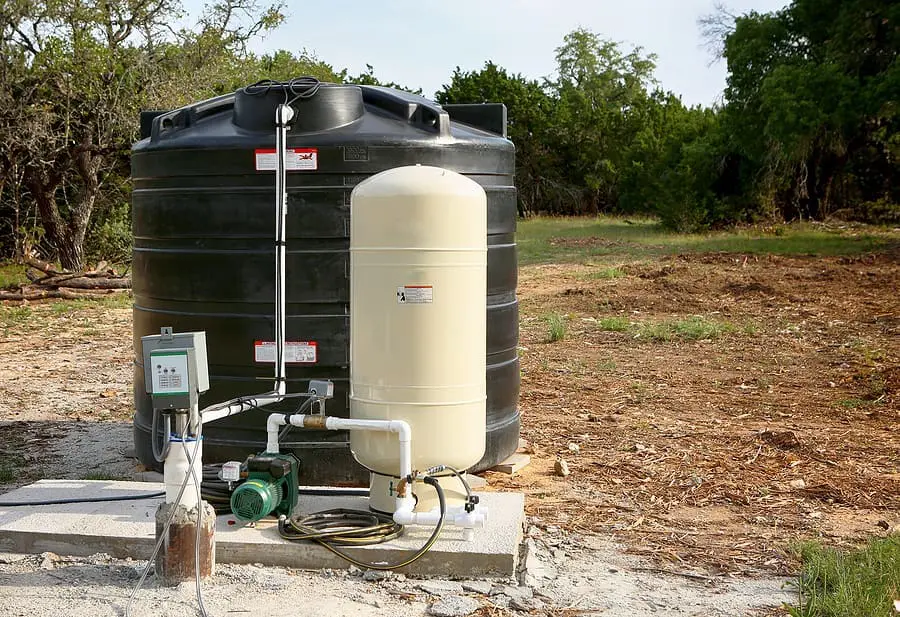 A shared water well supplies groundwater from one well to two or more properties. A pump moves water from the well into a pressure and distribution system, and underground water lines carry that water to each participating property. Depending on the design, the users may share the pump, pressure equipment, electrical controls, storage, and maintenance responsibilities. Because several properties depend on the same water source, well production, pump capacity, pressure, maintenance, access, and clearly defined responsibilities become especially important.
For rural homeowners around Santa Fe and Northern New Mexico, a shared well can be a practical way for neighboring properties to obtain water where municipal service is unavailable. These systems may include wells, submersible pumps, pressure tanks, controls, storage tanks, booster pumps, water lines, and water-treatment equipment.
The easiest way to understand a shared well is to recognize that there are really two systems operating together:
The physical water system — the well, pump, pressure equipment and piping that move groundwater.
The responsibility system — the arrangement that determines who pays for electricity, maintenance, repairs, testing and major equipment replacement.
Both matter if several households depend on the same source.
What Is a Shared Water Well?
A shared water well is a private groundwater system that supplies water to more than one property or household.
In simple terms:
Aquifer
↓
Water well
↓
Pump
↓
Pressure and/or storage system
↓
Distribution piping
↓
Home A + Home B + possibly additional users
An aquifer is an underground layer of rock or sediment that stores groundwater. A well provides access to groundwater, while a pump moves it to the surface and into the water-distribution system. A pressure tank helps stabilize water pressure and reduce pump cycling.
From there, piping carries the water toward the properties connected to the system.
The exact configuration can vary considerably. One shared well may have a relatively simple pump-and-pressure arrangement serving two nearby homes, while another system may incorporate storage tanks, booster pumps, constant-pressure equipment or more complicated distribution piping.
That is why you cannot determine whether a shared well is adequate simply by knowing that “there is a well on the property.”
Can Two Houses Use the Same Water Well?
Yes, a single well can be configured to serve more than one household, but the practical question is whether the entire system is appropriate for the combined demand and whether the use complies with the applicable well permit, water-right and local requirements.
Current New Mexico Office of the State Engineer records demonstrate that New Mexico recognizes water-right records involving multiple domestic households. Some individual domestic-well permit records also contain conditions requiring the permittee to notify the State Engineer in writing if the well begins serving more than one household. Those records show why a property owner should verify the conditions attached to the specific well and water-right file rather than assuming every shared-well arrangement is governed identically. (NM Water Resources Institute)
For Santa Fe-area properties, the Office of the State Engineer’s District 6 office handles assistance involving water rights and well permits. (Office of the State Engineer)
So the technical answer may be:
Can the well and equipment serve both homes?
The regulatory answer is a separate question:
Is the proposed use consistent with the permit and applicable requirements?
Both need to be understood.
How Does Water Get From One Shared Well to Multiple Homes?
The process begins underground.
Groundwater enters the well from the surrounding water-bearing formation. Depending on the well design, a submersible pump may be installed below the water level inside the well.
When the system calls for water, the pump moves groundwater upward through the drop pipe and toward the surface.
The water then enters the pressure and distribution system.
From there, the main line can branch toward the individual properties.
A simplified system looks like this:
| Component | What It Does |
| Aquifer | Stores groundwater underground |
| Well | Provides access to groundwater |
| Pump | Moves groundwater toward the properties |
| Controls | Start and stop pump operation |
| Pressure system | Helps regulate pressure and pump cycling |
| Storage system, if present | Stores water for later demand |
| Distribution piping | Carries water toward each property |
| Property plumbing | Delivers water inside each home or building |
What Equipment Is Shared in a Shared-Well System?
That depends on the particular installation.
Common shared components may include:
- The well itself
- Submersible or other well pump
- Pump controls
- Electrical equipment
- Pressure system
- Main distribution line
- Storage tank or cistern, if used
- Booster equipment, if used
Other components may serve only one property.
This is one reason a diagram or inspection of the actual system can be extremely valuable. When several homes have been connected to a private well over many years, owners may know that they “share a well” without fully understanding which equipment belongs to whom or exactly where the water lines run.
A well-system evaluation, pump-performance test, or water-production test can help property owners understand the physical side of the system.
Does Each House on a Shared Well Have Its Own Pressure Tank?
Not necessarily. It depends on how the system was designed.
Some systems may use common pressure equipment, while other configurations can involve additional pressure or storage components associated with individual properties.
The important point is that a pressure tank is not simply a large reserve of household water.
Its primary role in the well system is to help stabilize water pressure and reduce unnecessary pump cycling.
Sizing and configuration matter.
A pressure system designed around one household may not necessarily behave the same way after additional demand is added.
That is why questions such as:
“Can we just add another pressure tank?”
or
“Can we connect another house?”
should be answered after the well, pump, pressure system and combined demand have been evaluated.
How Is Water Pressure Maintained When Several Homes Share the Well?
Water pressure depends on the complete pumping and pressure system.
That may include:
- Pump capacity
- Pressure tank
- Pressure switch or pump controls
- Pipe sizing
- Distribution layout
- Storage, if present
- Booster equipment, if present
- Water use occurring at the same time
A shared-well pressure complaint therefore should not automatically be blamed on the well itself.
Low or fluctuating pressure could involve the pump, pressure tank, controls, piping, simultaneous demand, low well production, or another system issue.
What Happens When Several Homes Use Water at the Same Time?
This is where shared-well performance becomes particularly important.
Imagine one household is taking a shower while the other is doing laundry, running an irrigation line and filling a large bathtub.
The demand on the shared system rises.
Whether anyone notices a difference depends on several things:
Well production
Well recovery
Pump capacity
Pressure-system design
Pipe sizing
Storage capacity
Combined water demand
A well can exist and function while still being poorly matched to peak demand.
This is one of the most important distinctions in shared-well ownership:
Having a well is not the same thing as having enough water-system capacity for every user at peak demand.
Can One Household Affect Another Household’s Water Pressure?
Potentially, yes.
If multiple users draw water at the same time, the additional demand may expose limitations involving well production, pump output, pipe sizing, pressure equipment or system design.
That does not mean one neighbor is automatically “using too much water.”
If pressure regularly declines whenever both homes use water, the appropriate response is to evaluate the system before deciding what—or who—is responsible.
A professional evaluation can help distinguish between:
a well-production problem
and
a pump problem
and
a pressure-system problem
and
a distribution problem.
That distinction can prevent unnecessary repairs.
Can a Shared Well Run Out of Water?
A shared well can experience insufficient water production, but the phrase “run out of water” can describe several different situations.
Possible causes include:
- Groundwater levels changing
- Low well production
- Demand temporarily exceeding the well’s recovery
- Pump problems
- Electrical problems
- A malfunction in the pressure or distribution system
Northern New Mexico wells operate in geological conditions that can vary significantly by location. Water production should not be guaranteed because geology, water tables, and groundwater conditions differ from one property to another.
That is why a no-water condition should be diagnosed rather than immediately interpreted as proof that the well has gone dry.
Can a Shared Well Have a Water Storage Tank?
Yes. Water storage can be incorporated into some private well systems.
Storage can be particularly useful conceptually because well production and household demand do not always occur at the same rate.
For example, a well may produce water steadily over time while several homes occasionally create much higher short-term demand.
A properly designed storage system may allow water to accumulate and then use booster equipment to supply demand.
But storage is not automatically the answer to every shared-well problem.
Before recommending it, a professional should understand:
- Actual well production
- Water usage
- Pump performance
- Existing pressure system
- Distribution system
- Property needs
How Is Electricity for a Shared-Well Pump Handled?
There is no single arrangement that applies to every shared well.
The pump and controls need electricity, but the power account may be associated with one property, a shared arrangement, or another configuration established by the owners.
This is one of the issues that should be clearly understood before purchasing or entering a shared-well arrangement:
Who pays the pump’s electricity bill?
That may seem like a minor detail while the system works properly.
It becomes much more important when neighbors disagree about usage or costs.
The technical well contractor can evaluate the equipment. The allocation of costs and rights between property owners should be addressed through the applicable property documents and, where necessary, appropriate legal guidance.
Who Pays for Shared-Well Repairs and Maintenance?
Again, there is no universal answer that should be assumed.
A shared well can require maintenance or repair involving:
- Pump replacement
- Pressure tank
- Electrical controls
- Water lines
- Storage equipment
- Water testing
- Well rehabilitation
- Emergency repairs
The financial responsibility, however, should be clearly established by the agreement or other governing property documents.
This illustrates the two sides of a shared well:
| Physical Water System | Ownership / Management Question |
| Well | Who owns it? |
| Pump | Who pays for replacement? |
| Electricity | Who pays the power bill? |
| Pressure system | Who maintains it? |
| Water lines | Who repairs each section? |
| Water testing | Who schedules and pays? |
| Wellhead | Who has access? |
| Emergency repair | Who authorizes the work? |
| System upgrade | How are costs divided? |
A Shared Well Has Both a Water System and a Responsibility System
The water can flow perfectly today while the ownership arrangement remains unclear.
That ambiguity often becomes visible only after an expensive repair is needed.
What Should a Shared-Well Agreement Address?
A written agreement can help document how participating owners intend to manage the system.
Depending on the properties and applicable requirements, subjects worth addressing with appropriate legal guidance can include:
- Which properties participate
- Ownership of the well and equipment
- Water use
- Electricity
- Routine maintenance
- Water testing
- Emergency repairs
- Pump replacement
- Major upgrades
- Access to the wellhead and equipment
- Distribution-line responsibilities
- Cost sharing
- Addition of new users
- Transfer when property is sold
- Dispute procedures
These are general planning topics rather than legal advice.
New Mexico shared-well arrangements can intersect with well permits and water rights. The Office of the State Engineer directs people needing help with water rights, well permits or metering to the appropriate district office; Santa Fe is served by District 6. (Office of the State Engineer)
Current OSE water-right records also show that permit conditions can vary, reinforcing the importance of examining the specific well’s records rather than relying on a generic assumption about shared-well rights. (NM Water Resources Institute)
Who Is Responsible for Water Quality on a Shared Well?
Water quality is another issue that should not be overlooked simply because several homes receive water from the same source.
The U.S. Environmental Protection Agency recommends that private wells be tested annually for total coliform bacteria, nitrates, total dissolved solids and pH, with additional testing when other contaminants are suspected. EPA also recommends testing more frequently in certain circumstances or immediately when known groundwater or drinking-water problems occur. (US EPA)
A shared-well agreement should make it clear who is expected to arrange testing and how results are communicated among users.
The exact legal responsibility for a particular shared system should be verified for that property rather than inferred from a general article.
How Often Should a Shared Well Be Inspected?
Annual well inspections, along with periodic checks of the pressure tank, electrical components, pump performance, water quality, and freeze protection, can help identify developing problems before they become emergencies.
That preventative approach can be especially valuable with a shared well because one equipment failure can affect several households.
A preventive evaluation can help identify conditions such as:
- Pump-performance changes
- Pressure problems
- Electrical concerns
- Tank issues
- Water-production concerns
- Deteriorating components
before everyone loses water unexpectedly.
Proper diagnosis and preventative maintenance can reduce the risk of emergency failures and help avoid repeated temporary repairs that never address the underlying problem.
What Problems Can Develop With a Shared Water Well?
Many problems are the same ones found on any private well system.
They may include:
- No water
- Low water pressure
- Fluctuating pressure
- Pump failure
- Pressure-tank failure
- Pump short cycling
- Electrical failures
- Low water production
- Water-quality concerns
- Distribution-line problems
What makes a shared system different is the number of people affected.
If a common pump fails, two or more homes may lose water.
If pressure deteriorates, several users may notice it.
If the shared source develops a water-quality problem, multiple households may be affected.
That makes knowing the layout and responsibilities particularly valuable.
What Happens if the Shared-Well Pump Fails?
If several homes rely on one common pump, pump failure can interrupt water service to all of them.
Possible symptoms can include:
- Complete loss of water
- Intermittent water
- Reduced pressure
- Pump short cycling
- Electrical symptoms
- Unusual system behavior
Do not automatically replace the pump because there is no water.
The problem could be the pump.
It could also be:
controls
or
electrical equipment
or
pressure-system equipment
or
the water supply itself.
Professional diagnosis helps identify the actual cause before major components are replaced.
What if the Shared Well Does Not Produce Enough Water for Everyone?
This is a system-design question, not merely a pump question.
A professional evaluation may need to examine:
- Water production
- Groundwater level
- Pump performance
- Pressure equipment
- Combined demand
- Storage
- Distribution
- Existing equipment condition
Possible solutions should follow diagnosis.
Depending on the circumstances, a professional might evaluate pump-system changes, pressure improvements, water storage, well rehabilitation, booster equipment, or other approaches.
That does not mean any one of those solutions is automatically appropriate for a shared well.
The water source and the system have to be evaluated first.
Should You Have a Shared Well Inspected Before Buying a Home?
Yes. A shared well deserves careful due diligence before a real-estate purchase.
A buyer should understand more than whether water comes out of the faucet on inspection day.
Useful questions include:
| Question | Why It Matters |
| How many properties use the well? | Helps clarify total demand |
| Where is the well located? | Important for access and service |
| When was it last inspected? | Helps establish system condition |
| Has water production been tested? | Helps evaluate the water supply |
| What pump is installed? | It may be critical shared equipment |
| How is pressure maintained? | Important for household performance |
| Is storage used? | It may affect peak-demand performance |
| Who pays electricity? | Ongoing shared expense |
| Who pays for repairs? | Important ownership issue |
| Is the water tested? | Important for private-well ownership |
| Is there a written agreement? | Helps clarify responsibilities |
| Are service records available? | Provides maintenance history |
Also determine which Office of the State Engineer water-right and well records apply to the property. OSE maintains the New Mexico Water Rights Reporting System and directs well-permit and water-right questions to its district offices. (Office of the State Engineer)
A water-well contractor can evaluate the physical groundwater system.
A qualified real-estate or legal professional should address title, easement, agreement and contractual questions.
Is a Shared Well a Bad Thing When Buying Property?
Not automatically.
A shared water well should not be treated as either a red flag or a guarantee of trouble.
A properly designed and maintained system with adequate water production, appropriate equipment and clearly understood responsibilities may serve participating properties effectively.
The bigger concerns arise when no one knows:
- How much water the well produces
- What condition the pump is in
- How pressure is maintained
- When the system was last serviced
- Which water lines belong to whom
- Who can access the well
- Who pays when equipment fails
- Whether the water is regularly tested
That is why inspection and documentation are more valuable than assumptions.
When Should You Call a Water-Well Professional?
Professional evaluation makes sense when a shared system has:
- No water
- Low or unstable pressure
- Frequent pump cycling
- Suspected pump failure
- Electrical problems
- Declining water production
- Pressure-tank problems
- Water-quality concerns
- Questions about whether the existing system can handle additional demand
- An upcoming real-estate transaction
- No recent inspection or maintenance history
Groundwater systems can involve high voltage, pressurized equipment, and deep wells. Pump replacement, electrical repairs, well drilling, and pressure-system repairs should be performed by trained professionals.
Frequently Asked Questions About Shared Water Wells
How Does a Shared Water Well Work?
One well draws groundwater from an aquifer, and a pump moves that water into a pressure and distribution system serving multiple properties. Depending on the design, users may share the pump, controls, pressure system, storage and portions of the distribution piping.
Can Two Houses Use the Same Water Well?
Yes, a well can physically serve more than one household when the system has appropriate water production and equipment capacity. The particular well’s permit, water-right record and applicable New Mexico requirements should also be checked. OSE records show both multiple-household water rights and individual permit conditions addressing wells that serve more than one household. (NM Water Resources Institute)
Does Each House Need Its Own Pressure Tank?
Not necessarily. Shared-well configurations vary. The appropriate pressure-system design depends on the pump, demand, piping, controls and overall system.
Can One Home Affect the Other Home’s Water Pressure?
Potentially. Simultaneous demand can reveal limitations involving pump performance, pressure equipment, water production, pipe sizing or system design.
Who Pays for Repairs on a Shared Water Well?
There is no universal answer. Responsibilities should be clearly defined in the applicable shared-well agreement or other governing property documents. A legal professional can address ownership and enforceability questions.
Who Pays the Electricity for the Shared-Well Pump?
The arrangement varies by property. It should be clearly documented so participating users understand how the ongoing power cost is handled.
How Often Should a Shared Well Be Inspected?
Annual well inspections, along with pump-performance, pressure-system, electrical, and water-quality monitoring, can be a sensible preventative-maintenance approach for a shared system.
What Happens if the Shared-Well Pump Fails?
If all properties depend on one common pump, pump failure can interrupt water service to multiple users. The cause should be diagnosed because no-water problems can also involve controls, electrical equipment, pressure components or water production.
Should I Have a Shared Well Inspected Before Buying a Home?
Yes. Buyers should consider a professional well inspection, pump-performance testing, system evaluation, and water-production testing. They should also review the applicable well records, property documents, and shared-responsibility arrangements.
How Often Should Shared-Well Water Be Tested?
EPA recommends annual private-well testing for total coliform bacteria, nitrates, total dissolved solids and pH, with additional testing when other contaminants are suspected or certain conditions arise. (US EPA)
Shared Water Well Service in Santa Fe and Northern New Mexico
A shared water well is easiest to understand as one groundwater source serving multiple users.
But dependable operation depends on much more than drilling a hole and connecting two water lines.
The complete system includes:
Groundwater
↓
Well
↓
Pump
↓
Pressure and controls
↓
Storage, where applicable
↓
Distribution
↓
Multiple properties
And alongside that physical system is another equally important structure:
Who maintains it?
Who pays for it?
Who has access?
Who arranges water testing?
What happens when the pump fails?
That is why a shared well should be evaluated as both a groundwater system and a shared property responsibility.
External Sources and Further Reading
This article uses external authoritative sources for regulatory and private-well guidance. The New Mexico Office of the State Engineer is the appropriate state resource for questions involving well permits, water rights, and records that may apply to a specific Santa Fe-area property. The U.S. Environmental Protection Agency provides general guidance for private-well water testing and water quality. Because shared wells can also involve property rights, easements, agreements, and cost-sharing obligations, property-specific legal questions should be reviewed with a qualified New Mexico real-estate or legal professional. These external sources support the general educational information in this article; they do not replace review of the records, agreements, or physical well system for a particular property.
External references used: New Mexico Office of the State Engineer; New Mexico Water Resources Research Institute / New Mexico water-right records cited in the article; and the U.S. Environmental Protection Agency’s private-well guidance.
Epilogue
Boylan Water Well Service & Supply is a Santa Fe-based water-well contractor providing well drilling, pump installation and repair, pressure systems, water storage, water testing, troubleshooting, real-estate well inspections, and preventative maintenance throughout Northern New Mexico. When you need a new well, well service or well supplies, call the pros at Boylan Water Well Service & Supply
If you are buying a property with a shared well, experiencing low pressure or no water, concerned about pump performance, or unsure whether an existing system can reliably serve several users, Boylan Water Well Service & Supply can evaluate the physical water-well system and help identify its condition and performance.
Call Boylan Water Well Service & Supply at (505) 438-3416 to schedule a water well inspection or system evaluation in Santa Fe or Northern New Mexico. Boylan is located at 2743 Boylan Circle, Space 11, Santa Fe, New Mexico 87507.