What Does a Complete New Water Well System Include Besides Drilling?
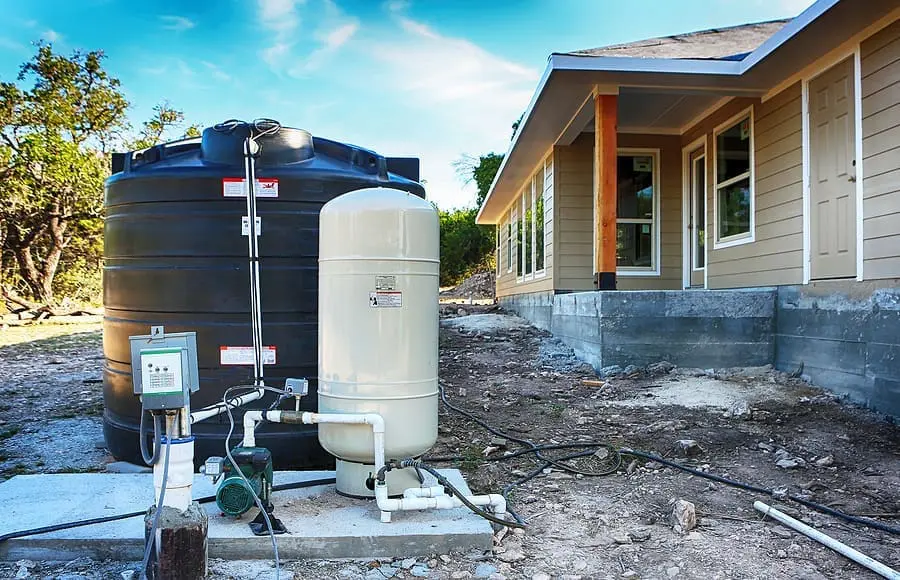 Drilling a new water well is only one part of creating a reliable water supply for a home. Once groundwater is reached and the well is constructed, additional equipment is needed to move that water into the house, maintain water pressure, and make sure the system operates properly.
A complete new water well system typically includes a finished well, a properly sized pump, water delivery piping, electrical controls, pressure equipment, and connections to the property’s plumbing. Water production testing and water-quality testing are also important. Some properties need additional equipment, such as storage tanks, booster pumps, filtration systems, or water treatment.
For homeowners building in Santa Fe and Northern New Mexico, understanding these components is especially important when comparing estimates. A contractor’s price for drilling a well may not include everything needed to deliver water to the kitchen sink, shower, or washing machine.
A Drilled Water Well Is Only the Starting Point
A completed borehole provides access to groundwater, but it cannot deliver water to a house by itself.
The well must have the appropriate casing, sealing, and wellhead protection. A pump must then lift the groundwater and move it through piping to the property’s water system.
The system also needs equipment to control pump operation and provide suitable water pressure.
For homeowners unfamiliar with the drilling process, our article on the steps involved in drilling a domestic water well explains how the well itself is constructed.
Once drilling is complete, the next concern is how the different components work together.
A typical residential system follows this path:
Groundwater enters the well, a pump lifts the water through a drop pipe, and an underground water line carries it toward the house. Pressure equipment and controls manage delivery to household plumbing. If needed, storage or treatment equipment is incorporated into the system.
The exact arrangement depends on the well’s water production, property layout, elevation, and household needs.
What Equipment Moves Water from the Well to the House?
Several components work together to turn a drilled well into an operating residential water system.
Submersible Well Pump and Drop Pipe
The well pump is responsible for lifting groundwater from the well and moving it into the water delivery system.
Many residential wells use a submersible pump, which operates underwater inside the well casing.
The pump connects to a drop pipe that carries water toward the surface. Electrical wiring supplies power to the pump motor, while associated controls manage its operation.
Choosing the correct pump requires more than knowing how deep the well was drilled.
The installer must consider the pumping water level, the well’s tested production, the distance and elevation to the house, and the pressure required by the plumbing system.
An oversized pump can withdraw water faster than a low-producing well can replenish it. An undersized pump may struggle to deliver the required flow or pressure.
Proper well pump selection and installation begins with understanding the well’s actual operating conditions.
Underground Water Lines and Well Connections
After groundwater reaches the surface, it must travel through a water line to the house or storage system.
This may require trenching, underground piping, fittings, valves, and a suitable connection at the wellhead.
The installation must also protect the water supply from contamination and damage.
In Northern New Mexico, freezing temperatures are another important consideration. Underground piping and exposed components need protection appropriate to the property’s conditions and applicable requirements.
A house located a considerable distance from its well may require additional piping and excavation work.
These costs and responsibilities are not necessarily included in the drilling portion of a proposal.
Electrical Wiring and Pump Controls
Electric well pumps require a dependable power supply and appropriate controls.
Depending on the equipment, the system may include a pressure switch, control box, motor protection devices, disconnects, and other electrical components.
A pressure switch in a conventional residential system monitors water pressure and signals the pump to start or stop as needed.
Some installations use variable-speed controls that adjust pump operation to changing household demand.
Electrical work must be performed by qualified professionals in accordance with applicable requirements.
Before approving a new well system proposal, homeowners should establish whether the contractor’s scope includes electrical connections, trenching for wiring, and coordination with an electrician.
Why Does a New Water Well System Need a Pressure Tank?
A pressure tank helps maintain household water pressure and reduces unnecessary pump starts and stops.
In a conventional pressure-tank system, the tank stores a limited amount of pressurized water. When someone opens a faucet, water can initially flow from the tank without immediately starting the well pump.
As pressure drops to the system’s preset level, the pressure switch activates the pump. The pump supplies water and restores pressure until the system reaches its shutoff setting.
This arrangement helps limit frequent pump cycling, which can place additional wear on the motor and other equipment.
Pressure tanks are available in different sizes, and the appropriate selection depends on pump capacity, controls, and expected water use.
Some constant-pressure systems use different tank arrangements, so every installation does not require the same tank size or control setup.
Homeowners who want to understand the relationship between pump operation and household pressure can also read about improving water pressure from a private well.
When Does a New Well Need a Water Storage Tank or Booster Pump?
Not every residential water well needs a separate water storage tank.
A well with sufficient production may supply a household directly through a pump and pressure tank system.
However, some properties benefit from additional water storage.
A low-producing well may supply water steadily but not fast enough to meet several household demands at once. For example, the well might be unable to support simultaneous showering, laundry, and outdoor watering.
In this situation, a properly designed storage system can allow groundwater to accumulate over time.
Water is pumped from the well into a cistern or storage tank. A separate booster pump then moves stored water into the home’s pressurized plumbing system.
This separates the rate at which the well produces water from the rate at which the household uses it.
Direct Well Pumping Compared with a Storage System
| System arrangement | How it works | When it may be appropriate |
| Well pump and pressure tank | The well pump supplies the household pressure system directly. | When well production and pump capacity adequately meet expected demand. |
| Well pump, storage tank, and booster pump | The well fills a storage tank, and a booster pump supplies the house. | When water production is limited or household demand requires additional storage. |
| Constant-pressure system | Pump controls adjust operation to help maintain more consistent pressure. | When the well and system design can support the required flow and pressure. |
Consider a hypothetical rural home outside Santa Fe with a well that produces water more slowly than the household uses it during peak periods.
Installing a larger pump would not create additional groundwater. A storage tank and booster system might be a more suitable solution because the well could replenish storage gradually.
The correct design would depend on measured well production, household demand, and available storage capacity.
Boylan Water Well Service & Supply provides water storage tanks, booster pumps, and pressure systems for properties that need these solutions.
What Water Testing and Treatment Might Be Needed?
A newly drilled well can produce clear water that still contains substances requiring attention.
Before using a new private well for drinking, homeowners should arrange appropriate water-quality testing.
Testing can identify concerns such as bacteria, nitrate, arsenic, and other naturally occurring or human-related contaminants.
The appropriate testing plan depends on local groundwater conditions and potential contamination sources.
The U.S. Environmental Protection Agency’s private well guidance explains the importance of testing and maintaining private drinking water supplies.
The New Mexico Environment Department also provides information about water quality and environmental health in New Mexico.
Does Every New Well Need a Water Filtration System?
No. Water treatment should be selected according to actual water-quality results and the property’s needs.
A sediment filter may be useful when water contains suspended particles. Other equipment may address hardness, iron, or specific dissolved contaminants.
Different water-quality problems require different treatment methods. A basic sediment filter, for example, does not necessarily remove dissolved contaminants or make bacterially contaminated water safe to drink.
Water testing should guide treatment decisions rather than assuming that every new well needs the same equipment.
For additional information, see our article on ensuring water from a new well is safe to drink.
What Installation Work Happens Outside the Well?
A complete water system project may involve several types of work beyond the drilling site.
These can include trenching between the well and house, installing underground water lines, connecting electrical service, setting pressure equipment, and integrating the system with the building’s plumbing.
If a cistern or water treatment system is required, the project may also need a suitable equipment location, additional piping, electrical connections, and protection from freezing.
Properties in mountainous areas around Pecos, Glorieta, or other Northern New Mexico communities may present additional challenges because of elevation changes, terrain, and access.
For example, a home built uphill from its well may require a pump capable of overcoming more elevation-related pressure than a home at the same elevation.
The installer must consider total dynamic head, which accounts for the lift, pressure, and friction losses the pump must overcome to deliver water.
A complete proposal should identify which contractor is responsible for each part of the installation.
This becomes particularly important when the drilling contractor, electrician, plumber, and builder are separate businesses.
What Should a Complete New Water Well System Estimate Include?
The word complete does not always mean the same thing in every contractor’s estimate.
One proposal may cover drilling and basic well construction, while another includes pump installation, pressure equipment, underground piping, and final system testing.
Neither approach is necessarily inappropriate, but homeowners need to understand what they are purchasing.
Before comparing prices, ask each contractor for an itemized description of the work.
Project component or service |
What to confirm in the estimate |
| Well drilling and construction | Are drilling, casing, sealing, and well completion included? |
| Well development and production testing | How will the well’s water production be evaluated and documented? |
| Pump and drop pipe | Are the pump, pipe, wiring, and installation included? |
| Pressure tank and controls | What equipment will regulate household water pressure? |
| Underground water line | Who provides trenching, piping, and the connection to the house? |
| Electrical service | Who installs the required power supply and electrical connections? |
| Water-quality testing | Which tests are included, and who arranges laboratory analysis? |
| Storage and booster equipment | Are these needed, and are they included or priced separately? |
| Water treatment | Will any necessary filtration or treatment be included? |
| Final system testing | Who verifies that the installed equipment operates correctly? |
Homeowners should also ask how changes in drilling depth, equipment requirements, or site conditions will affect the final price.
A proposal with a lower initial price may exclude work that another contractor has already included.
For more guidance on comparing contractors, see What Should I Ask Before Hiring a Water Well Drilling Company?.
How Is a Complete Water Well System Tested Before Use?
Once the pump, pressure equipment, piping, and electrical controls are installed, the system must be checked for proper operation.
This process is sometimes called commissioning.
The installer evaluates how the equipment performs together rather than checking individual components in isolation.
Depending on the system, the final evaluation may include checking pump operation, pressure settings, water delivery, electrical controls, leaks, and storage equipment.
A system that produces water at the wellhead may still have problems delivering adequate pressure to the house if the pump, piping, or controls are not correctly matched.
Water-quality testing and any necessary treatment must also be addressed before the supply is used for drinking.
What Documentation Should Homeowners Receive?
Before the project is considered complete, property owners should request the information needed to operate and maintain their new water system.
This may include:
- Available well construction records and applicable completion documentation.
- Water production and pumping test results.
- Laboratory water-quality results.
- Pump and pressure equipment specifications.
- Equipment manuals and applicable warranty information.
- Instructions for operating and maintaining the system.
- Contact information for future service and repairs.
These records can be valuable when diagnosing future problems, replacing equipment, or selling the property.
What Maintenance Does a New Water Well System Require?
A newly installed system still requires ongoing attention.
Pressure tanks, electrical controls, pumps, and water treatment equipment can develop problems over time. Groundwater conditions and water quality may also change.
Routine maintenance helps identify issues before they interrupt the household water supply.
Homeowners should arrange appropriate water testing, monitor changes in water pressure or appearance, and have the system inspected according to its equipment requirements and operating conditions.
In Northern New Mexico, protecting exposed piping and equipment from freezing is particularly important.
Our articles on private water well maintenance and winterizing a water well system provide additional guidance.
Planning a Complete New Water Well System in Northern New Mexico
A reliable residential water supply requires more than a successfully drilled well.
The pump must match the well’s production and the property’s water needs. Pressure equipment must deliver usable water throughout the house. Piping, electrical controls, and any necessary storage or treatment equipment must operate together.
For homeowners in Santa Fe, Española, Eldorado, Pecos, and surrounding Northern New Mexico communities, the most important step is understanding the entire system before construction begins.
Boylan Water Well Service & Supply provides water well drilling, pump installation, pressure tanks, water storage systems, water testing, and water treatment services throughout Northern New Mexico.
If you are planning a new well, Boylan can help you evaluate your property’s water needs and discuss the equipment required for a complete water system.
Call (505) 438-3416 or contact Boylan Water Well Service & Supply to discuss your project and request an estimate.
Source note: Internal article links were selected from the supplied October 25, 2026 linking library. They are recorded public URLs but were not independently live-tested. The article’s technical content follows the supplied Boylan knowledge base and worksheet; current regulatory requirements and testing recommendations should be confirmed before publication.