How Can I Protect My Water Well from Contamination and Bacteria?
 Owning a well can leave you asking if your water is safe to drink. Follow these tips to help protect your well water from bacteria and other contaminants.
Know Where Your Well Is Located On Your Property
Your well will be identified by the 4- to 8-inch diameter metal pipe (known as a casing) that runs the length of the well hole. Older wells sometimes have casings that don’t go all the way to the surface, leaving their wellheads underground. Wells with their wellheads less than 12 inches above ground are susceptible to contamination from surface runoff. Contact a professional to bring your wellhead up to 12 inches above grade.
Know the location of all the wells near your home. Illegal or incorrectly plugged, buried or abandoned wells can create health and safety hazards for your family and neighbors. The State of New Mexico has well ID tags available free of charge (first come, first served) to owners of older wells that can be picked up at any of the 7 OSE district offices. These computer-generated tags are for recording purposes only.
Locate your septic tank.
Your septic tank treats household waste partially. Locate your septic tank using your property map. If you don’t know where your map is, your local soil,water or health agency may have a copy. Otherwise, you can locate the tank by tracing the underground discharge pipe from the tank or hire a septic service professional who has the equipment to locate your tank and give you an idea of its size.
Locate your drain field.
Your drain field is a series of underground pipes that evenly distribute wastewater into the soil for treatment by bacteria, soil, and water. They are expensive to replace. Don’t drive over, park, or use heavy equipment on your drain field. If you notice regularly wet areas in your drain field, call a professional. Something may have failed in your system. Don’t irrigate your drain field, add soil to it, or remove soil from it. Only grass should be grown above your drain field. If you notice your grass grows greener every few feet over your drain field during a dry spell, don’t worry, this is normal.
Test Well’s Water
Test your well for coliform bacteria and nitrate at least once a year. If you think your water may be contaminated with other substances, contact your county health department about testing for additional contaminants. Ask before you order for testing prices. Visit your local county health department for a list of certified laboratories.
Pump your septic tank
Services to pump out your septic tank are abundant. Pumping should be done every few years, depending on household usage and tank size. As a rule of thumb, a household of four should have their tank pumped every 3 to 4 years. Pumping companies in New Mexico can give you specifics regarding your tank. Adding chemicals to your tank will not eliminate the need for pumping and may damage your system. Ignoring your system can lead to backyard sewage backups, costly repairs and contamination of your well.
Practice water conservation measures
The less water you use, the less recharge needed immediately around your well’s pumping zone. This decreases the amount of time water spends in the soil being treated by soil and water bacteria. Also saves you money on your water bill and helps your septic system run more efficiently.
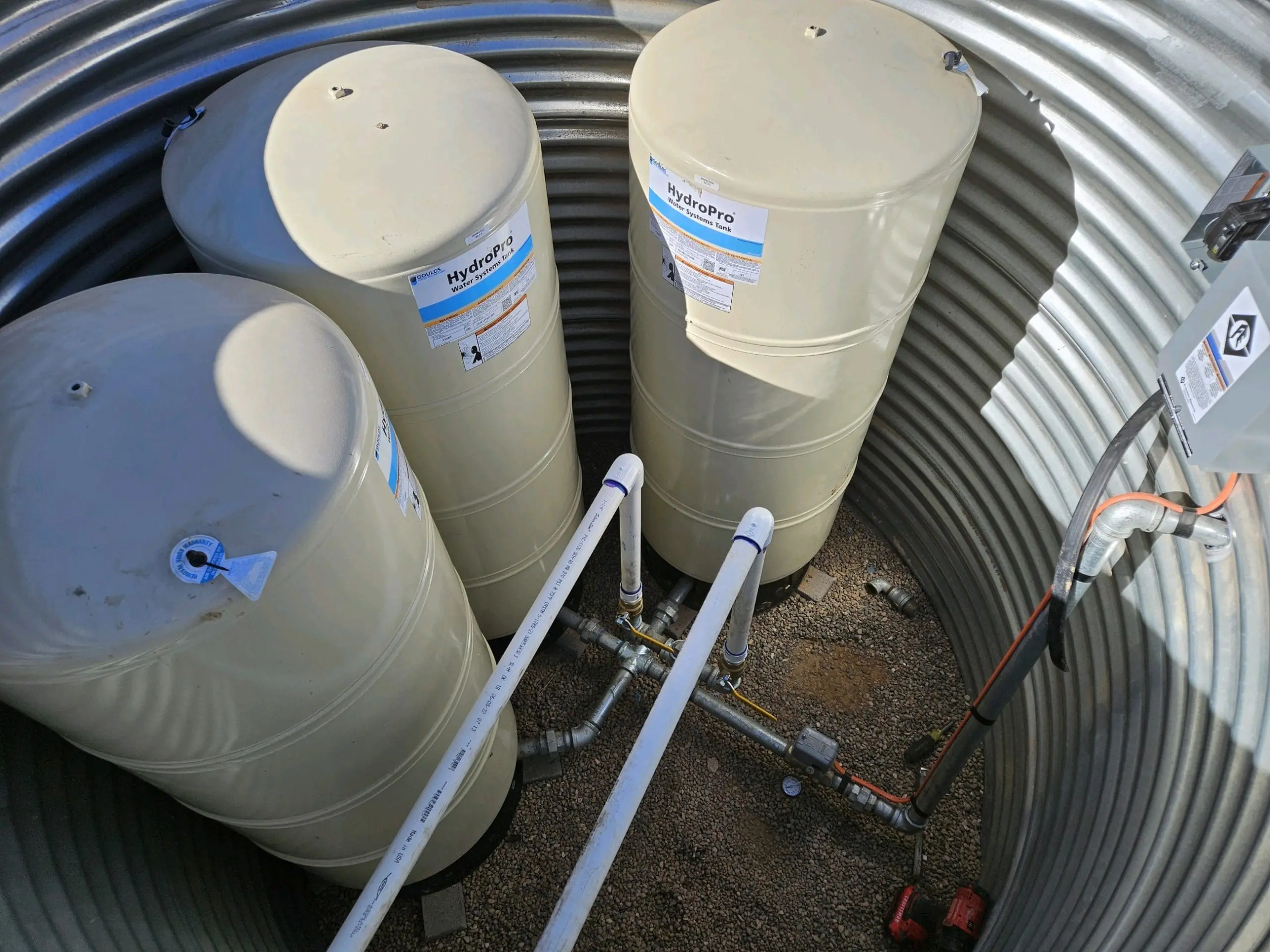
Clean out your well house
Keep fertilizers, pesticides, oils, and harmful chemicals far away from your wellhead. Chemicals can still find their way into your well through or around your casing. Keep anything in your well house that will not cause safety concern if exposed to water.
Make sure your well is capped with an appropriate sanitary seal
If your well is missing its cap, contact a pump professional to supply you with the proper parts and give you recommendations to fix your well. A sanitary seal keeps contaminants out of your well and can hold your well pipe up. If the pump assembly has to be removed for repairs, it can get technical. Never remove a sanitary seal that is properly placed on top of your well. Be sure the vent screen and sanitary seal are intact. These screens keep bugs and debris from getting into your well.
Install backflow prevention devices on all outdoor faucets.
Here’s one more way you can protect your drinking water system. Consider installing backflow prevention devices on all outdoor faucets.
Water is drawn into your well from a hose placed inside. If someone is using a chemical sprayer attached to that hose, or the hose is submerged in chemicals, water will flow backward from the hose into your well. Install a backflow prevention device on each outdoor faucet if it does not have one. Without backflow prevention, simply install a brass atmospheric vacuum breaker on each outdoor faucet. Lawn irrigation faucets, livestock watering faucets, chemical mixing faucets and pressure washers require backflow prevention devices.
Use lawn and garden chemicals sparingly
Nitrate is often found in fertilizers. Groundwater becomes contaminated when more fertilizer than needed leaches through the soil. Use fertilizer sparingly and follow all instructions on the label. Containers used for mixing and storing pesticides and fertilizers are regulated by law. Take extra precautions not to store or mix pesticides and fertilizers where spills can reach the soil and groundwater.
Prevent oil, gasoline, and household chemicals from contacting soil
Contact your trash collector about recycling oil and properly disposing of hazardous waste. Contact your local soil and water conservation office about properly disposing of motor oil, gasoline and household chemicals. Never dump these chemicals on the ground on your property or pour them down your drains. Fuel all your equipment on an impervious surface and repair leaks. If you have an underground fuel tank, contact the New Mexico Environment Department, Petroleum Storage Tank Bureau at 505-476-4300. They can help you determine what steps need to be taken to eliminate potential risks.
Keep animal waste from contacting rainwater
Animal feedlots and manure piles leach bacteria and nitrate into groundwater. Keep rain runoff and soil seepage from these areas away from groundwater. Ideally move manure piles to a roofed concrete pad or cover manure piles with a tarp during rainy seasons to prevent contamination of groundwater.