How Many Homes Can Share One Santa Fe Water Well?
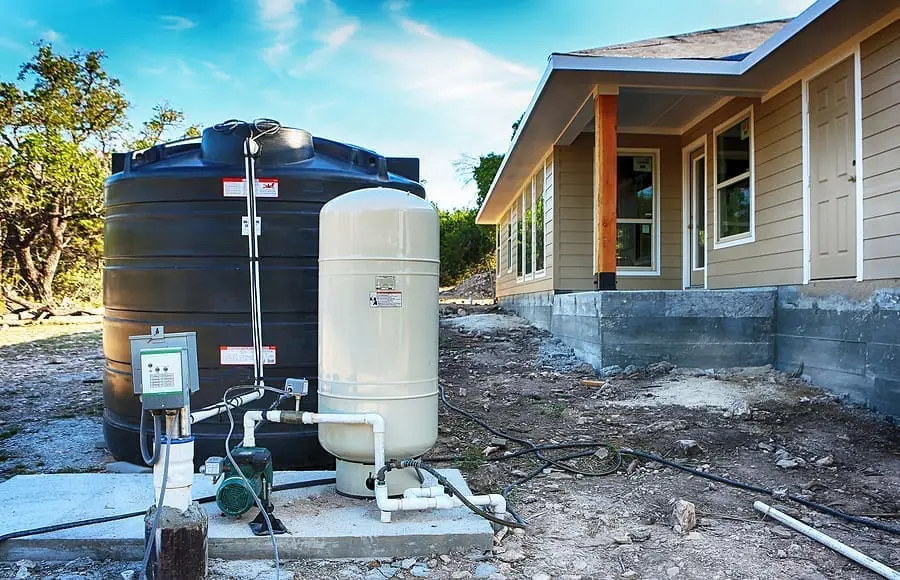
There is no single number of homes that every private water well can support. One well may be capable of serving multiple homes, but the actual number depends on the well’s sustained water production and recovery, household demand, pump and pressure-system capacity, storage, distribution system, and any applicable well-permit or water-use requirements. The reliable way to determine whether an existing well can support another home is to evaluate the well and complete water system rather than relying on well depth or a generic homes-per-well formula.
For property owners around Santa Fe and Northern New Mexico, it is natural to want a simple answer:
One well = how many homes?
Two?
Three?
Four?
The problem is that the number of houses is actually the wrong place to start.
A water well does not respond to the number of roofs connected to it. It responds to how much groundwater is available, how much water can be produced and recovered, how much water users demand, and whether the pump, pressure system, storage, and piping can deliver that water when it is needed.
That leads to the most useful rule for evaluating a shared water well:
Don’t Count Houses—Measure Water Supply and Demand
A simplified way to think about it is:
Available Water Supply
Well yield + well recovery + usable storage
versus
Total Water Demand
Number of occupants + simultaneous household use + outdoor use + other water demands
Then you have to determine whether the:
pump + pressure system + storage + distribution piping
can reliably deliver that water.
Can One Water Well Supply Multiple Homes?
Potentially, yes.
A single water well can physically supply more than one home when the groundwater source and complete water system are capable of meeting the combined demand.
But that does not mean every well can support the same number of homes.
Consider two very different wells.
One may have strong sustained water production, suitable pumping equipment, adequate pressure, and storage to help manage high-demand periods.
Another well may work adequately for one home but already struggle during periods of heavy water use.
Connecting another residence to those two wells would create very different results.
This is why generic statements such as the following are misleading:
“One well can serve four houses.”
The practical capacity of a well depends on the individual groundwater source and water system.
There is also a separate regulatory question. A well might appear physically capable of supplying another residence, but that does not automatically establish that the additional use is permitted. Current New Mexico well-permit, water-right, and related requirements should be verified before making a property-specific decision.
So, there are really two questions:
Can the well physically support the additional demand?
and
Is the additional use permitted for that particular property and well?
They are not the same question.
Why Isn’t There a Simple Number of Houses Per Well?
Because two houses can have completely different water demands.
Imagine:
House A
One person lives there.
There is little outdoor watering.
Laundry is done occasionally.
House B
Five people live there.
There are several showers every morning.
Laundry runs frequently.
The property has a large garden and irrigation.
Both structures count as:
one home.
But they clearly do not create the same water demand.
That leads to another important principle:
Homes Are Not a Unit of Water Demand
The number of occupants, water-use patterns, simultaneous demand, irrigation, and other uses can matter much more than simply counting buildings.
That is why asking:
“Can my well support two houses?”
is less precise than asking:
“Can my well and water system reliably meet the combined demand that these two households will create?”
What Actually Determines How Many Homes a Well Can Support?
Several factors work together.
| Factor | Why It Matters |
| Well yield | Indicates how much water the well can produce |
| Well recovery | Affects how the groundwater source replenishes after pumping |
| Number of occupants | Different households can have very different demands |
| Peak water demand | Several households may use water simultaneously |
| Pump capacity | Determines how water is moved through the system |
| Pressure system | Helps provide usable water pressure |
| Water storage | Can help manage production versus peak demand |
| Distribution piping | Affects how effectively water reaches each property |
| Outdoor water use | Irrigation and other uses can significantly increase demand |
| Well condition | Aging or deteriorated equipment may affect performance |
| Applicable requirements | Physical capacity does not automatically establish permitted use |
Together, these factors provide a much more useful picture of shared-well capacity than the number of homes alone.
The key word is system.
The well matters.
But so do the pump, pressure tank, controls, storage, distribution lines, and actual users.
What Is Well Yield?
Well yield is the rate at which water can be produced from a well under defined conditions.
It is one of the most important measurements when evaluating whether an existing well may be able to handle increased demand.
Yield should not be confused with:
- Well depth
- Pump size
- Water pressure
- Storage-tank capacity
- Number of houses
A well can be deep without necessarily having high production.
Likewise, a shallower well should not automatically be assumed to have inadequate production.
What matters is what the particular groundwater formation and well can actually provide.
What Is Well Recovery?
Recovery concerns what happens to the water supply after pumping.
In simple terms, there are two different questions:
How quickly can water be pumped out of the well?
and:
How does groundwater replenish the well after that water is withdrawn?
Those are not the same thing.
A well serving multiple homes may experience much greater demand during certain parts of the day.
For example:
Home A — shower
Home B — shower
Home C — washing machine
Home D — outdoor watering
All four may occur around the same time.
A well that performs adequately under light demand may react differently when several homes draw water simultaneously.
That is why well recovery should be considered alongside yield and peak demand when evaluating shared-well capacity.
Does a Deeper Well Produce More Water?
Not necessarily.
This is one of the most important misconceptions to avoid.
Well depth tells you how far the well extends underground.
It does not, by itself, tell you:
- How much water the well sustainably produces
- How quickly it recovers
- What the aquifer conditions are
- Whether the pump is properly matched
- Whether the system can support several households
Do not treat:
deeper well = more water
as a reliable rule.
This distinction is especially relevant in Northern New Mexico, where groundwater conditions may vary with local aquifers, bedrock, elevation, water-table conditions, mountain terrain, and seasonal groundwater changes. Those local conditions matter more than generic national assumptions.
So if one neighbor says:
“My well is 500 feet deep and serves two houses, so yours should too,”
that does not establish the capacity of your well.
Groundwater systems have to be evaluated individually.
Does a Bigger Well Pump Mean More Homes Can Use the Well?
Not necessarily.
A pump moves groundwater.
It does not create groundwater.
One technical distinction is especially important:
A larger pump can move water faster, but it cannot make the aquifer replenish the well faster.
If the underlying limitation is inadequate water production or recovery, installing a larger pump alone does not solve that problem.
Think of it this way.
If a container is filling slowly, installing a larger drain pump does not make water enter the container faster.
Likewise, a well pump must be matched appropriately to the water source and complete system.
Pump considerations can include:
- Well characteristics
- Water production
- Desired flow
- Pressure requirements
- Distribution system
- Storage configuration
- Total household demand
The better question is not:
“Can I install a bigger pump so I can add another house?”
It is:
“What part of the water system is actually limiting capacity?”
Why Does Peak Water Demand Matter?
Households do not use water evenly throughout the day.
Demand may be concentrated around:
- Morning showers
- Laundry
- Dishwashing
- Evening household use
- Outdoor irrigation
- Gardens
- Livestock or agricultural use where applicable
Peak demand can be more useful than simply estimating average daily usage because several households may need water at the same time.
Imagine three households that use enough water overall for the well to keep up over 24 hours.
That sounds encouraging.
But what happens if all three homes create their heaviest demand between 6:30 and 8:00 a.m.?
The water system still has to perform during that period.
That is why:
Average demand and peak demand are not the same thing.
Four homes do not politely take turns using water.
Can One House Use Too Much Water From a Shared Well?
One household’s demand can potentially affect the other users on a shared water system.
However, it is usually more useful to avoid immediately blaming a particular neighbor.
The technical question is:
Does combined demand exceed what the well and system can reliably provide?
The problem may result from:
- One unusually high-demand property
- Several homes using water simultaneously
- Insufficient well production
- Inadequate storage
- Pump limitations
- Pressure-system limitations
- Distribution issues
For example, a property using substantial landscape irrigation may create a very different demand from a one-person household with limited outdoor water use.
That does not automatically mean the higher-use household is doing anything wrong.
It means the shared water system needs to be capable of meeting the demand being placed on it.
Can a Storage Tank Help a Well Serve Multiple Homes?
Potentially.
Storage can be useful because well production and household demand do not always happen at the same rate.
A simplified example:
Well produces water gradually
↓
Water accumulates in storage
↓
Several households create high short-term demand
↓
Stored water is available to help meet that demand
This can help separate the rate at which the well produces water from the rate at which homes occasionally need it.
But the limitation is equally important:
A Storage Tank Stores Water. It Does Not Create Groundwater.
Storage changes when water is available; it does not change how much groundwater the source can sustainably provide.
If the underlying groundwater source cannot provide enough water over time for the combined demand, simply installing a larger tank does not create additional water.
Storage should therefore be considered as part of a complete system evaluation.
Does Water Pressure Determine How Many Homes Can Share a Well?
No.
Water pressure is important, but pressure and groundwater production are not the same thing.
A pressure system helps provide usable household pressure and manage pump operation.
But good pressure does not prove that the well has adequate long-term production.
Likewise, low pressure does not automatically prove that the well lacks water.
Low pressure may involve:
- Pump performance
- Pressure tank
- Pressure switch
- Pump controls
- Pipe sizing
- Distribution distance
- Elevation differences
- Leaks
- Simultaneous demand
- Low well production
Common water-system problems can include low pressure, pump or pressure-tank failure, short cycling, electrical faults, faulty pressure switches, and low well production.
That leads to another useful distinction:
Water-source capacity and water-delivery capacity are different questions.
A well may have adequate groundwater but a poor delivery system.
Or the delivery equipment may work well while the groundwater source itself is limited.
Can a Shared Well Run Out of Water?
A multi-home well can experience insufficient water availability, but the phrase “the well ran dry” can oversimplify what is happening.
Possible causes of reduced or lost water may include:
- Demand temporarily exceeding well recovery
- Seasonal groundwater changes
- Declining well production
- Pump problems
- Electrical failures
- Pressure-system problems
- Distribution problems
Low well production or a dry well can cause water-service problems, but pump failures, pressure-tank failures, electrical faults, faulty pressure switches, and other equipment problems can create similar symptoms.
So:
No water does not automatically mean no groundwater.
Diagnosis matters before major decisions are made.
Avoid promises of guaranteed or unlimited water because groundwater and geological conditions vary.
Can I Add a Second Home to My Existing Water Well?
Possibly—but successful service to one home does not automatically prove that a water well can support two homes.
Before connecting another residence to a shared well, evaluate the complete system.
| Question | What Needs to Be Evaluated |
| How much water does the well produce? | Well yield and production |
| How does the well recover? | Groundwater response after pumping |
| What is the current demand? | Existing household usage |
| What demand will the second home add? | Proposed additional use |
| Can the pump handle the system? | Pump performance and application |
| Is pressure adequate? | Pressure system |
| Is storage available or appropriate? | Storage system |
| Can piping deliver the water? | Distribution system |
| Is the additional use permitted? | Applicable requirements |
These questions provide a practical starting point for evaluating whether another home can be added.
That technical information can provide a much stronger basis for a decision than:
“The well has always worked fine.”
Can Three or Four Homes Share One Well?
Potentially, but there is no responsible universal answer such as:
“Three homes are fine, but four are too many.”
The same principles apply.
Three small households with modest demand may create a different load than two large households with extensive outdoor water use.
Again:
Homes are not a unit of water demand.
Evaluate:
well production
↓
recovery
↓
actual demand
↓
peak demand
↓
pump
↓
pressure
↓
storage
↓
distribution
The applicable property and water-use requirements also need to be verified separately.
Specific New Mexico rules concerning maximum homes, domestic-well connections, water rights, permits, or subdivision requirements should be verified through current authoritative sources rather than generalized.
How Do You Know if a Well Can Support Another House?
You test and evaluate the system rather than guessing.
A professional evaluation may consider:
- Existing well information
- Well condition
- Water production
- Pump performance
- Pressure equipment
- Storage
- Distribution
- Current demand
- Proposed additional demand
A professional evaluation also helps distinguish four concepts that should not be treated as interchangeable:
Well Depth
How deep the well extends.
Well Yield
How much water can it produce under defined conditions.
Pump Capacity
How quickly the equipment can move water.
Household Demand
How much water the users require.
Understanding those differences is far more useful than trying to find a universal houses-per-well number online.
What Does NOT Prove That a Well Can Support More Homes?
Several common assumptions can be misleading.
| Common Assumption | Why It Can Be Misleading |
| “The well is very deep.” | Depth does not equal sustainable water production |
| “It has a large pump.” | A pump cannot create groundwater |
| “The water pressure is excellent.” | Pressure does not establish well yield |
| “It serves one house perfectly.” | Additional demand changes system requirements |
| “There is a large storage tank.” | Storage does not create groundwater |
| “The neighbor’s well is the same depth.” | Groundwater conditions can vary by location |
Each of these assumptions can lead to the wrong conclusion about a well’s actual capacity.
This is particularly important in Northern New Mexico, where local aquifers, bedrock conditions, water-table variations, seasonal groundwater conditions, mountain terrain, and other regional factors can affect groundwater performance.
Should a Shared Well Be Inspected Before Buying a Home?
Yes.
If you are considering buying a property served by a shared water well, do not stop at:
“I turned on the faucet and water came out.”
That tells you very little about long-term system capacity.
Useful questions include:
- How many properties currently use the well?
- What is known about water production?
- Has the well been professionally evaluated?
- How is pressure maintained?
- What pump serves the system?
- Is water storage used?
- Are service records available?
- Has there been recurring low pressure or no-water trouble?
- Where are shared distribution lines located?
- What equipment is shared?
- What are the existing household demands?
- What permit or property documents apply?
What New Mexico Rules Apply When Several Homes Share a Well?
This question needs to be kept separate from the technical capacity discussion.
Current New Mexico requirements concerning domestic-well connections, permits, water rights, shared domestic wells, subdivision requirements, and adding residences should be verified through appropriate current authorities before relying on a specific rule or numerical limit.
For that reason, property owners should not rely on a blanket statement such as:
“New Mexico always allows X houses on a domestic well.”
The applicable requirements can depend on the particular well, property, permit, and proposed use.
For a property-specific decision, the appropriate regulatory records and requirements should be verified separately.
When Should You Have a Shared-Well System Professionally Evaluated?
Consider an evaluation if:
- You want to add another residence
- You are buying a property on a shared well
- Several homes experience low pressure
- Water availability declines during heavy use
- You do not know the well’s production
- Pump performance is uncertain
- The pressure system is aging
- You are considering adding water storage
- The system has little or no maintenance history
- The property has experienced recurring no-water problems
A complete evaluation is more useful than a one-size-fits-all assumption because it identifies whether the limiting factor is the groundwater source, equipment, storage, pressure, distribution, or demand.
Frequently Asked Questions About How Many Homes Can Share a Water Well
How Many Homes Can Share One Water Well?
There is no universal number. The answer depends on water production, recovery, household demand, pump and pressure-system capacity, storage, distribution, well condition, and applicable requirements.
Can One Water Well Supply Two Homes?
Potentially. The important question is whether the particular well and complete water system can reliably meet the combined demand of both households.
Can Three Houses Share One Well?
Potentially, but “three houses” does not establish capacity. The well’s production and recovery, combined demand, pump, pressure system, storage, and distribution should be evaluated.
Can Four Houses Share One Well?
Possibly, but there is no generic four-house rule. Four low-demand homes can create a different water load from two high-demand homes.
Does a Deeper Well Produce More Water?
Not necessarily. Depth describes how far the well extends. It does not by itself establish sustainable water production or multi-home capacity.
Can a Bigger Pump Let More Houses Use the Well?
Not automatically. A larger pump can move water differently, but it cannot create groundwater or make the aquifer replenish the well faster.
Can a Storage Tank Help a Shared Well?
Storage may help manage the difference between gradual well production and short periods of high demand, but storage does not increase the underlying groundwater supply.
Can One House Use Too Much Water From a Shared Well?
One property’s demand may affect other users when the combined demand approaches the capacity of the groundwater source and water system. The issue should be evaluated as a supply-and-demand question rather than automatically blamed on one household.
Can I Add a Second House to My Existing Well?
Possibly, but successful service to one home does not automatically prove adequate capacity for another. Evaluate water production, recovery, pump performance, pressure, storage, distribution, and proposed additional demand before making that assumption.
How Do You Know if a Well Can Support Another Home?
A professional system evaluation can examine water production, pump performance, pressure equipment, storage, distribution, existing demand, and the proposed additional demand.
Shared Water Well Evaluations in Santa Fe and Northern New Mexico
So, how many homes can share one water well?
The best answer is not:
two
or:
three
or:
four.
The better question is:
Can this particular well and water system reliably meet the combined demand of these particular properties?
Start with:
Well production
↓
Well recovery
↓
Household demand
↓
Peak water use
↓
Pump performance
↓
Pressure system
↓
Storage
↓
Distribution
Then separately verify any property-specific requirements governing the additional use.
This approach keeps the decision focused on the actual groundwater source and water system, while accounting for Northern New Mexico conditions and avoiding unsupported assumptions about guaranteed water production.
Santa Fe Well Assessment
Boylan Water Well Service & Supply is a Santa Fe-based groundwater contractor providing water well drilling, pump installation and repair, pressure systems, well diagnostics, water storage, inspections, water-production testing, water treatment, and preventative maintenance throughout Northern New Mexico.
External Sources and Further Reading
This article relies on authoritative external sources to separate the physical capacity of a water well from the legal or regulatory question of whether additional homes may use it. The New Mexico Office of the State Engineer is the primary state resource for current information about domestic wells, well permits, water rights, changes in use, and requirements that may apply to multiple household connections. Groundwater and well-performance concepts can also be supported by resources from the National Ground Water Association and the U.S. Geological Survey. Water-quality questions may additionally involve guidance from the U.S. Environmental Protection Agency or the New Mexico Environment Department. Because requirements can vary by well, property, permit, and proposed use, these sources provide general guidance and should not replace review of the records and requirements that apply to a specific property.
External references: New Mexico Office of the State Engineer; National Ground Water Association; U.S. Geological Survey; U.S. Environmental Protection Agency; and, where applicable, the New Mexico Environment Department.
If you are considering adding another home to an existing water well, buying property served by a shared well, or wondering whether your current groundwater system can reliably meet additional demand, have the physical well system evaluated before relying on a generic homes-per-well estimate.
Final Thoughts
Call Boylan Water Well Service & Supply at (505) 438-3416 to schedule a water well inspection or system evaluation in Santa Fe or Northern New Mexico. Boylan is located at 2743 Boylan Circle, Space 11, Santa Fe, New Mexico 87507.