What Basic Facts Do I Need to Know About Water Well Maintenance?
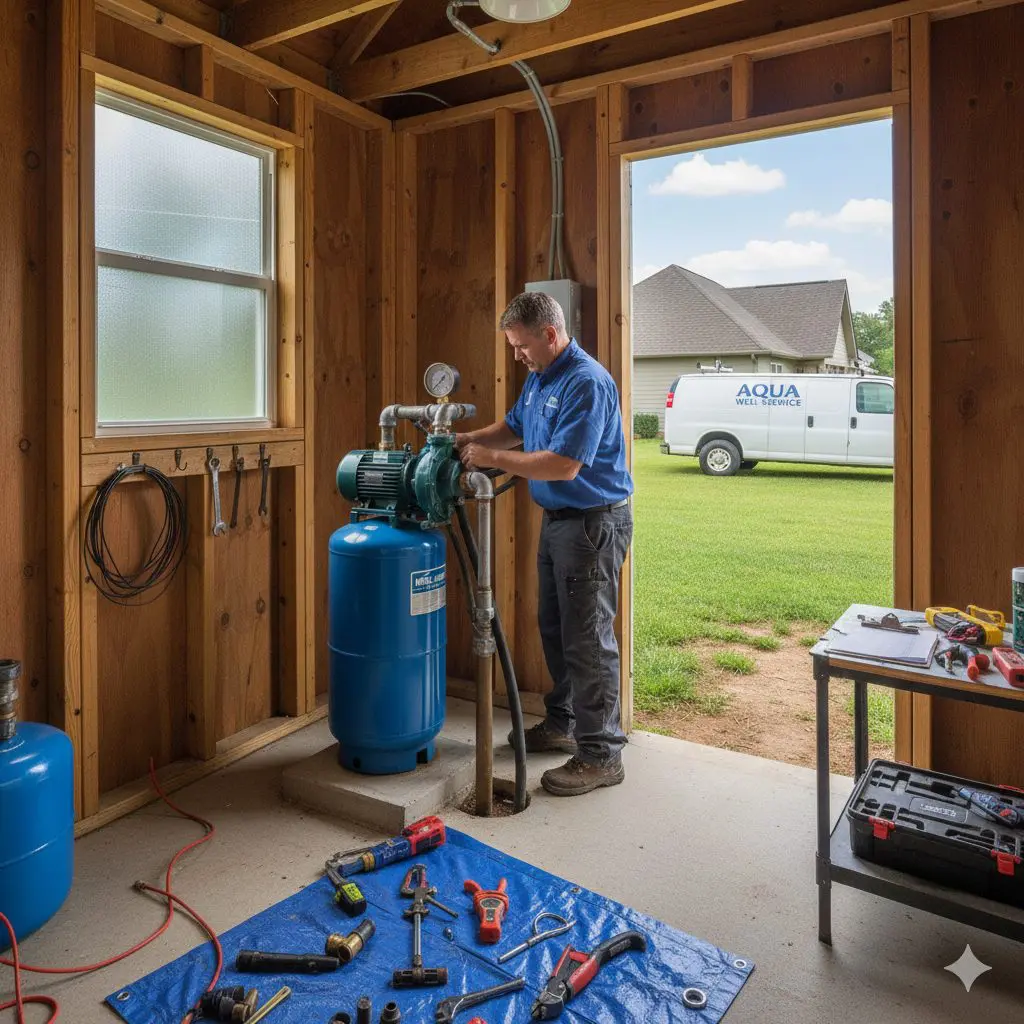 Approximately 43 million people in the United States use well water to drink in their homes.
Some homeowners choose well water in order to stay off of municipal water supplies, particularly in areas where connection to a city water supply is cost prohibitive or not an option. Though others may inherit a well when they purchase their home, or have installed a well to remain independent from public utilities and the chemicals used to treat city water supplies.
Unlike city water customers, well owners don’t have to worry about expensive monthly bills for water usage. Homeowners are then expected to test and maintain their own wells and water quality.
If you have a private well, it is your responsibility to be proactive in maintaining the well’s quality to ensure a safe and clean water supply for every member of your household.
How to Maintain Well Water
It is important to know how to maintain wells to avoid contamination or repairs such as total equipment failure, which can be very expensive.
There are a number of components to the upkeep of well water systems; regular inspections, testing, and maintenance.
Regular upkeep and early intervention with issues can relieve homeowners that their well system is operating at its peak performance.
Annual Testing of Your Water
Even if you’ve never had a water quality problem, you should still test your well water annually.
Problems like iron bacteria which develop over time, can become an immediate issue with your water. Pollutants can also enter your water as a result of environmental disasters such as floods or hurricanes.
Important tests for well water filtration installations include total coliform bacteria, nitrates, total dissolved solids, and pH; a negative result in just one of these categories signals that “your well is compromised, and a well water filtration system may be needed”.
Chemical solutions, like shock chlorination, may temporarily resolve these types of problems, but would have to be reapplied regularly and will add chemicals to your water supply. And, not all of the pollutants would be accounted for by this solution.
If you have already installed a water filter but can still see evidence of contamination, you may need to clean your filters or get a specialist to determine the problem.
Stay on Top of Well Water Filtration Maintenance
Filters offer continuous protection by continuously removing contaminants.
A water softener is often installed along with a filter by many homeowners, as hard water is another prevalent condition of private wells. Maintenance is done regularly to keep water quality stable. Maintenance depends on the water filter or the water softener used.
- Sediment filters: If there is a lot of sediment in your water, spin-down sediment filters should be cleaned by opening the valve to flush out the accumulated matter every 1-3 months or so. The pleated sediment filters can be checked and rinsed every three to six months and replaced every six to twelve months and/or when clogged.
- Carbon filters: The replacement frequency will depend on water usage, water quality and system design. Under normal conditions, catalytic carbon media do have a lifespan of years before replacement.
- Reverse osmosis (RO) filters: Kind Water’s RO systems, for example, use several stages of filtration but are easy to care for. Our compact reverse osmosis, RO system, has a pre-filter membrane with 4 stages, plus 2 more stages in a single cartridge post-filter. The 4 stage RO filter is to be changed once a year while a 2 stage filter must be changed once every 6 months.
- UV filters: UV filter lamps should be replaced annually; even though they may still emit light, the intensity of the light diminishes over time. The outer sleeve should be cleaned at least every six month in order to prevent a buildup of minerals. Should the sleeve become permanently clouded or scratched it must be replaced for UV light to effectively penetrate the water.
- Salt-based water softeners: Salt-based water softeners must be regularly filled with salt. Kind Water has a few models of smart meters that monitor the brine levels and allow the homeowner to schedule backwashing via an app on their phone. Even better, we have an auto-ship plan that sends out the entire annual replacement filter needs at a reduced price. For non-smart metering brine tanks, the brine tank should be monitored and filled periodically as needed, normally when the salt level is below half full, or visibly saturated with brine.
- Salt-free softeners: These types of systems use a cartridge, like the eSoft cartridge, that doesn’t have to be replaced because the cartridges work by physically changing the hard water minerals instead of removing them.