What Permits Are Required Before Drilling a New Water Well in New Mexico?
Drilling a private water well in New Mexico involves more than choosing a location and bringing a drilling rig onto the property. Before work begins, the property owner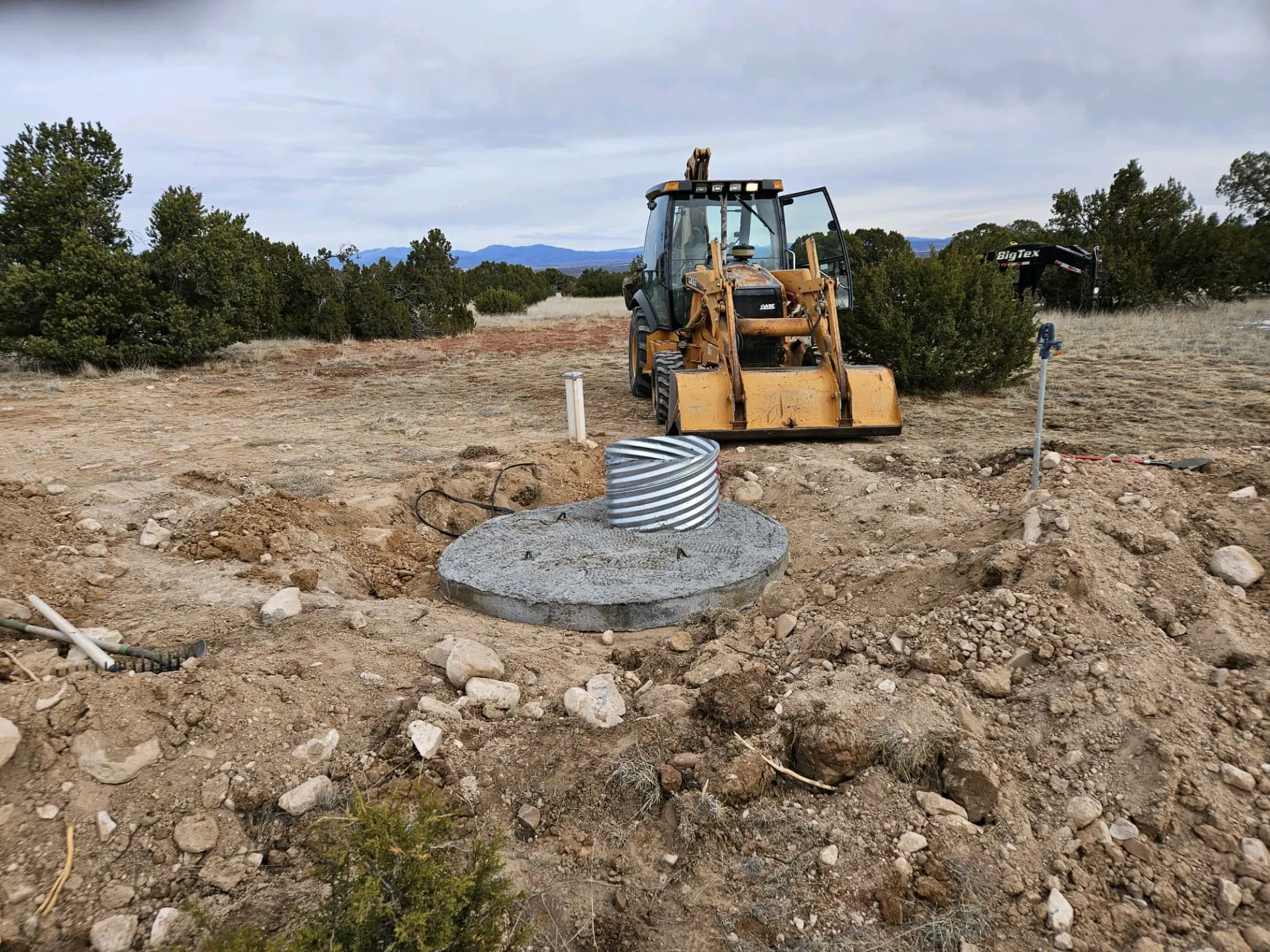 must determine what type of water use is planned, obtain the appropriate authorization from the New Mexico Office of the State Engineer, satisfy applicable setback requirements, and check whether the county or municipality requires additional land-use or development approval.
These requirements matter because groundwater in New Mexico is a regulated public resource. A landowner does not automatically receive unrestricted permission to drill and use groundwater simply because the well will be located on private property.
For many rural homeowners, ranch owners, builders, and buyers of undeveloped land, permitting is one of the least familiar parts of a new well project. It can also be one of the most important. Starting the process correctly helps prevent expensive delays, unsuitable well placement, conflicts with a septic system, and problems obtaining approvals for a future home.
Boylan Water Well Service & Supply works with property owners throughout Santa Fe and Northern New Mexico, where groundwater conditions, county development rules, water-use restrictions, terrain, and property layouts can vary considerably. The company’s established editorial profile emphasizes practical education, honest recommendations, Northern New Mexico groundwater knowledge, and complete water well systems rather than one-size-fits-all promises.
What permits are required before drilling a new well in New Mexico?
Most new private wells require a permit from the New Mexico Office of the State Engineer before drilling begins. Depending on the property and intended use, the owner may also need county development authorization, septic-system approval, utility clearance, building approval, or other local review.
The exact requirements depend on several factors:
- Whether the well will serve one home, multiple homes, livestock, agriculture, or a commercial operation
- Whether the property already has an active well
- Whether the new well will replace, supplement, repair, or deepen an existing well
- The property’s location
- Local zoning and development regulations
- Court-imposed or administrative restrictions affecting the groundwater basin
- The proposed location of the well in relation to septic systems and other contamination sources
The permit needed for a single-family domestic well is not necessarily the same authorization required for an irrigation, agricultural, municipal, industrial, or commercial water use.
That is why property owners should avoid assuming that every private well follows the same process.
The Office of the State Engineer is the primary state permitting authority
The New Mexico Office of the State Engineer, commonly abbreviated as OSE, administers groundwater appropriations, domestic well permits, well construction rules, well-driller licensing, and water-right records.
New Mexico law treats groundwater as public water subject to appropriation for beneficial use. The Office of the State Engineer therefore regulates where wells may be drilled, how the water may be used, and what conditions apply to the permit. (State Records Center & Archives)
For most property owners planning a new household well, the central approval is a 72-12-1.1 domestic well permit.
The application generally asks for information such as:
- Applicant’s name and mailing address
- Type of domestic use
- Number of households to be served
- Proposed well location
- Name of the property owner
- Driller’s name and license number, if known
- Proposed well depth
- Outside diameter of the casing
- Additional information requested by the State Engineer
A properly completed application must be filed with the OSE district office responsible for the groundwater basin in which the property is located. OSE recommends contacting the appropriate district office for water-right and well-permit assistance. (State Records Center & Archives)
What is a domestic well permit?
A domestic well permit authorizes a relatively limited amount of groundwater for approved domestic purposes. Depending on the permit and local restrictions, those purposes may include water for a household, limited noncommercial outdoor irrigation, or drinking and sanitation associated with certain qualifying facilities.
A domestic well permit should not be viewed as permission to use unlimited groundwater.
Under the statewide domestic well regulations, the maximum diversion for a single household may generally be limited to one acre-foot per year unless other conditions apply. More restrictive limits may be imposed by a court, county, municipality, permit condition, or domestic well management area. In a declared domestic well management area, a new permit may be limited to 0.25 acre-foot per year or less. (State Records Center & Archives)
The permitted quantity, purpose, place of use, meter requirements, and other conditions should be reviewed carefully after the permit is issued.
Domestic use is not the same as every other water use
A household well permit may not authorize uses such as:
- Commercial crop irrigation
- Large-scale agricultural production
- Water bottling
- Manufacturing
- Commercial car washing
- Concrete batching
- Other high-volume commercial operations
Properties requiring water for agriculture, livestock, commercial operations, subdivisions, or multiple connections may need a different water-right analysis or application.
A qualified water well contractor can help identify the physical requirements of the proposed system, but questions about the legal scope of a water right should be confirmed with the Office of the State Engineer or an attorney experienced in New Mexico water law.
Table: Permits and approvals that may apply
| Permit or approval | What it addresses | Typical authority |
| Domestic well permit | Authority to drill and use groundwater for qualifying domestic purposes | New Mexico Office of the State Engineer |
| Replacement well permit | Authorization to replace an existing permitted domestic well | New Mexico Office of the State Engineer |
| Supplemental well permit | Authorization for an additional well tied to an existing domestic permit | New Mexico Office of the State Engineer |
| Repair or deepening permit | Drill-rig work used to repair or deepen an existing domestic well | New Mexico Office of the State Engineer |
| Well-use amendment | Change between approved domestic-use categories | New Mexico Office of the State Engineer |
| Septic-system permit | Approval of an on-site liquid-waste system and its location | New Mexico Environment Department or delegated local authority |
| Development or utility authorization | Land-use, grading, construction, well-location, or development compliance | County or municipality |
| Building permit | Construction of the home or other permitted structure | County or municipality |
| Electrical permit | Electrical installation serving the pump and water system | Applicable state or local authority |
| Water-right authorization for non-domestic use | Agricultural, commercial, municipal, industrial, or other uses | New Mexico Office of the State Engineer |
This table is a general planning guide. A particular parcel may require fewer or additional approvals.
Do you need a separate permit to replace an existing well?
Yes. A replacement domestic well generally requires a new permit from the State Engineer.
The application may require:
- The file number of the well being replaced
- Existing and proposed well locations
- The reason replacement is necessary
- Proposed well depth and casing diameter
- Property ownership information
- The driller’s information
- Confirmation of the legal lots and uses served
The State Engineer may also require the old well to be properly plugged or capped. A replacement well is generally expected to serve the same authorized property and type of domestic use as the well being replaced. (State Records Center & Archives)
A property owner should not assume that moving the new well to a different part of the property is automatically allowed. The proposed point of diversion must be reviewed and approved.
Is a permit required to deepen or repair a well?
A State Engineer permit is generally required when repairing or deepening a domestic well involves the use of a drilling rig.
By contrast, the domestic well regulation states that a drilling permit is not required merely to perform work on the pumping equipment. Pump replacement, pressure-tank service, electrical troubleshooting, and similar work may still be subject to other licensing or electrical requirements, but they are treated differently from modifying the drilled well itself. (State Records Center & Archives)
This distinction is important because homeowners sometimes use “well repair” to describe several different services:
- Pulling and replacing a submersible pump
- Repairing electrical controls
- Replacing a pressure tank
- Cleaning or rehabilitating the well
- Deepening the borehole
- Installing new casing
- Drilling a replacement well
The required authorization depends on what work will actually be performed.
Do you need water rights before drilling a domestic well?
You need authorization from the Office of the State Engineer to appropriate groundwater. For a qualifying residential project, that authorization may take the form of a domestic well permit rather than the purchase and transfer of a larger existing water right.
However, a domestic well permit is still a regulated water authorization. It has limits and conditions.
Property owners should verify:
- Whether the proposed use qualifies as domestic use
- Whether the parcel is in a restricted basin or management area
- Whether a court order affects new wells
- Whether the county imposes more restrictive water-use limits
- Whether an existing permit is already tied to the parcel
- Whether a shared-well agreement or multiple-household permit applies
- Whether a meter will be required
The State Engineer may reject an application where a court has restricted new wells or where a government entity has established a prohibition or recommendation against drilling in an area of water-quality concern. (State Records Center & Archives)
Can every New Mexico property receive a domestic well permit?
Not necessarily.
A permit application may encounter complications when:
- The property is located in a restricted groundwater area
- The parcel is already served by an operational permitted well
- A new well would conflict with an existing permit
- The site cannot meet contamination setbacks
- The proposed use is not truly domestic
- The application contains an inaccurate legal description
- Local development rules require connection to another water system
- A court order or administrative guideline limits new wells
- The lot is too constrained to accommodate both a well and septic system
- The property lies on land governed by a different jurisdictional arrangement
An OSE permit also does not guarantee that drilling will encounter an adequate water supply. It provides legal authorization to drill and divert water under stated conditions. Geology ultimately determines whether a well produces water and how much it may yield.
Boylan’s company knowledge base specifically warns against promises such as “guaranteed water,” “unlimited water,” or other claims that overlook geological uncertainty.
Why well placement must be coordinated with the septic system
On many rural properties, the well and septic system are planned at roughly the same time. Treating them as separate projects is a serious mistake.
New Mexico’s liquid-waste rules establish minimum separation distances between private drinking-water wells and septic-system components. The required setback depends on the component.
Under the state table:
- A private drinking-water well must generally be at least 50 feet from a building sewer.
- It must generally be at least 50 feet from a septic treatment unit.
- It must generally be at least 100 feet from a disposal field.
- It must generally be at least 100 feet from a seepage pit.
Different requirements apply to public wells, irrigation wells, watercourses, arroyos, and other features. Site-specific approvals, variances, treatment requirements, and local restrictions can also affect the final layout. (State Records Center & Archives)
Why this matters before drilling
Once a well is drilled in the wrong location, the owner may discover that there is not enough room left for:
- The septic tank
- The primary disposal field
- A replacement disposal area
- A driveway
- The home
- Utility trenches
- Required property-line setbacks
- Future additions or accessory structures
Moving a proposed well on paper is inexpensive. Correcting a bad location after drilling is not.
A coordinated site plan should show the home, proposed well, septic components, property lines, easements, utilities, roads, drainage features, neighboring wells, and likely equipment access.
What is the State Engineer’s well setback requirements?
In addition to contamination-source requirements, a new domestic well must generally be at least 50 feet from an existing well owned by someone else unless the State Engineer grants a variance.
The State Engineer may consider a variance for a replacement well or to allow greater separation from a contamination source. The permit may also contain other construction or spacing conditions. (State Records Center & Archives)
This is one reason a complete property survey and accurate site plan are valuable before the application is filed.
Approximate locations based on fences, tire tracks, old maps, or verbal descriptions can create problems. A fence is not always located on the legal property boundary, and an old well may not appear where the owner expects it to be.
Are county permits also required?
They may be.
The Office of the State Engineer permit does not automatically satisfy county zoning, development, grading, building, utility, fire-safety, or water-conservation requirements.
Local rules vary across Northern New Mexico. Property owners should check the county and, when applicable, the municipality where the property is located.
Santa Fe County requirements
Santa Fe County provides a useful example of why local review matters.
The county states that development outside incorporated areas must comply with its Sustainable Land Development Code and generally requires county development approval. Its residential development guidance also states that authorization to proceed is required before development of a water-supply well, and it provides a utility-authorization process for well-only projects. (Santa Fe County)
Santa Fe County also operates a Domestic Well Use Metering Program. County guidance says developments using a well are subject to the program, while recorded plats, covenants, permit conditions, and the Sustainable Land Development Code may establish metering and reporting obligations for particular properties. (Santa Fe County)
That means a property owner in Santa Fe County may need more than the state well permit before drilling or developing the property.
Requirements vary by location
A project in Santa Fe County may not follow the same local process as a project in:
- Española
- Los Alamos
- Eldorado
- Pecos
- Edgewood
- Moriarty
- Las Vegas, New Mexico
- Taos
- Pojoaque
- Chimayó
- Glorieta
- Lamy
- Cerrillos
Boylan Water Well Service & Supply serves communities across Northern New Mexico, where local development procedures and groundwater conditions can differ.
Do you need a licensed well driller?
New Mexico generally requires water wells to be constructed by a well driller licensed by the State Engineer.
The State Engineer’s rules also provide that it is unlawful to begin drilling a water well without the required valid well-driller license. The licensing program requires professional experience, examinations, bonding, and liability insurance.
Hiring a licensed drilling contractor helps protect the property owner because a professional driller should understand:
- Permit conditions
- Well-construction standards
- Casing and sealing requirements
- Local geology
- Drilling methods
- Well logs
- Required reporting
- Equipment access
- Pump-system planning
- Proper abandonment procedures
Boylan’s company knowledge base identifies water well drilling, pump installation, pump repair, inspections, pressure systems, storage, water treatment, and ongoing maintenance as parts of its complete groundwater-system services.
What information should be gathered before applying?
A property owner can reduce delays by assembling accurate information before the application is prepared.
Table: Information commonly needed before applying
| Information | Why it matters |
| Property owner’s legal name | Must match ownership and application records |
| Mailing address and contact information | Used for official notices and correspondence |
| Deed or ownership document | Confirms ownership and legal parcel information |
| Legal description of the property | Identifies the authorized place of use |
| Parcel or account number | Helps county and state staff locate the property |
| Proposed well location | Used to review spacing and site suitability |
| Number of homes to be served | Determines the appropriate permit category |
| Intended water use | Determines whether domestic authorization is appropriate |
| Existing well information | Identifies possible replacement or supplemental-well issues |
| Proposed depth and casing size | Required technical information on many applications |
| Driller’s name and license number | Identifies the licensed contractor, when selected |
| Septic-system location | Helps verify contamination setbacks |
| Site plan or survey | Shows property boundaries, improvements and constraints |
| Easement information | Identifies access or location conflicts |
| County development requirements | Prevents state and local approval conflicts |
Not every application requires precisely the same attachments. Applicants should use the current OSE form and confirm district-office requirements before submitting.
How does the permitting process work?
A typical residential well project may follow this sequence.
1. Confirm the intended use
Determine whether the well will serve:
- One household
- Multiple households
- A guest house
- Livestock
- Landscaping
- Agriculture
- A commercial property
- A future subdivision
- A combination of uses
The answer determines whether a standard domestic permit is appropriate.
2. Research the property
Review:
- Recorded deed
- Plat
- Easements
- Existing water-right records
- Existing well permits
- County zoning
- Development restrictions
- Water covenants
- Septic records
- Utility availability
Do not rely only on information from a real estate listing.
3. Develop a preliminary site plan
Mark the proposed locations of:
- Well
- House
- Septic tank
- Disposal field
- Replacement disposal area
- Roads and driveway
- Property lines
- Easements
- Utilities
- Arroyos and drainage
- Existing and neighboring wells
- Storage tanks
- Livestock areas
4. Consult the appropriate agencies
Contact the OSE district office and the relevant county or municipality.
Ask whether the parcel is affected by:
- A domestic well management area
- Court restrictions
- Local metering
- Water-use covenants
- Utility-authorization requirements
- Special development review
- Public water availability
- Additional setback requirements
5. Select an experienced licensed driller
A driller familiar with Northern New Mexico can help evaluate practical issues such as rig access, bedrock, elevation, likely well depth, casing, equipment staging, and pump-system design.
6. Submit the permit application
Use the current form and provide complete, consistent information. The Office of the State Engineer directs well-construction documents to the district office administering permits in the project area.
7. Wait for written approval
Do not begin drilling merely because the application has been submitted.
The drilling contractor should receive and review the issued permit and all conditions before mobilizing equipment.
8. Complete county or local requirements
Obtain any required:
- Utility authorization
- Development permit
- Grading permit
- Building approval
- Septic approval
- Electrical authorization
- Fire-supply review
- Road or access approval
9. Drill and construct the well
The contractor must follow the issued permit and applicable well-construction standards.
10. File the well record
The driller must maintain a record as drilling progresses and file a complete well record with the State Engineer and permit holder within 20 days after completion. A well log is required for every hole drilled, including a hole that does not encounter water. The permit holder remains responsible for making sure the well record is properly filed. (State Records Center & Archives)
11. Install and test the complete water system
After the well is drilled, the project may continue with:
- Pump selection
- Drop pipe and wiring
- Pressure tank
- Controls
- Water line
- Storage tank, if needed
- Booster system
- Electrical connection
- Disinfection
- Water testing
- Performance testing
- Customer education
A drilled hole alone is not a functioning household water system.
How long is a domestic well permit valid?
New Mexico’s domestic well rules generally require the well to be completed and the well record filed within one year after the permit is issued.
If those requirements are not met, the permit automatically expires. The regulation states that no extension will be granted under this provision; a new application and fee are then required. (State Records Center & Archives)
Property owners should therefore avoid applying too early if they are not ready to proceed, but they also should not schedule drilling before approval is secured.
A practical timeline should coordinate:
- Financing
- Land purchase
- Home design
- Septic approval
- County development review
- Contractor availability
- Site access
- Weather
- Drilling permit
- Pump installation
- Utility trenching
How long does well-permit approval take?
There is no single dependable timeline for every application.
Processing time can be affected by:
- Completeness of the application
- Correct legal description
- Existing well records
- Type of water use
- Basin restrictions
- Local requirements
- Agency workload
- Need for corrections
- Multiple-household arrangements
- Water-right complications
- Property ownership issues
A straightforward domestic application may move more efficiently than a project involving a replacement location, several households, commercial use, an existing water right, a subdivision, or a restricted groundwater area.
Homeowners should avoid setting construction dates based on an assumed approval time. Confirm the current status with the responsible agency.
Are well inspections required?
The answer depends on what is meant by “inspection.”
New Mexico’s process relies heavily on:
- A valid permit
- Licensed well construction
- Compliance with permit conditions
- Proper well records
- State access for water-level measurement or meter reading
- Any inspections or approvals required by local agencies
- Septic-system inspection requirements
- Electrical and building inspections where applicable
The Office of the State Engineer may require a meter, well identification tag, or other permit conditions. The agency and its representatives are authorized to access the well for official duties such as meter reading or water-level measurement. (State Records Center & Archives)
Do not assume that one final inspection automatically confirms every part of the project. The owner should keep copies of the permit, well log, county approvals, septic records, pump information, warranties, water tests, and maintenance records.
Common permitting mistakes that delay well projects
Choosing the well location before planning the septic system
This can leave inadequate room for required separation distances.
Assuming land ownership includes unrestricted water rights
Groundwater use is regulated even when the well is on private land.
Using the wrong application
New, replacement, supplemental, repair, deepening, and amended-use applications are not interchangeable.
Providing an inaccurate legal description
A small inconsistency between the deed, plat, application, and county records can create delays.
Ignoring an existing well permit
A second well on the same legal lot may be treated as a supplemental well rather than an entirely new domestic well.
Failing to check local rules
A state permit does not override a more restrictive county ordinance, court order, or lawful local requirement.
Starting drilling before receiving approval
Submitting an application is not the same as receiving a permit.
Hiring an unlicensed person
Water well drilling is specialized, regulated work involving heavy equipment, deep boreholes, groundwater protection, and construction standards.
Missing the one-year completion deadline
An expired permit may require a new application and filing fee.
Failing to confirm that the well record was filed
The permit holder has responsibility for ensuring the completed well record reaches the State Engineer.
Table: Common permit delays and how to avoid them
| Delay | Common cause | Prevention |
| Application returned for correction | Missing or inconsistent information | Compare the application with the deed and plat before filing |
| Well location rejected | Septic, neighboring well, easement, or property-line conflict | Prepare a coordinated site plan first |
| Wrong permit category | Existing well or non-domestic use was overlooked | Research well records and intended use |
| County approval delayed | Local authorization was not requested | Contact county development staff early |
| Contractor cannot begin | Permit has not been issued | Do not schedule drilling based only on submission |
| Permit expires | Project did not proceed within one year | Coordinate permitting with construction readiness |
| Final records incomplete | Well log was not confirmed | Obtain and retain the filed well record |
| Metering issue | County or permit conditions were overlooked | Review the permit, plat, covenants, and local code |
What role does a professional water well contractor play?
A professional contractor does more than operate a drill rig.
An experienced company can help the owner understand the practical relationship between:
- Property layout
- Access for drilling equipment
- Geological formations
- Well depth
- Casing
- Water production
- Pump sizing
- Storage
- Pressure
- Electrical demand
- Future maintenance
The contractor may also help prepare technical information for an application, coordinate the approved location, follow permit conditions, document the formations encountered, and complete the required well record.
However, the property owner remains an important participant. The owner must provide accurate ownership and property information, disclose the intended water uses, obtain required land-use approvals, and retain all project documents.
Northern New Mexico permitting and drilling considerations
Northern New Mexico presents conditions that cannot be understood through a generic national well-drilling guide.
Properties may include:
- High-desert terrain
- Mountain access
- Bedrock
- Volcanic formations
- Deep groundwater
- Seasonal weather limitations
- Long distances from electrical service
- Shared roads
- Narrow access points
- Arroyos
- Rural septic systems
- Water-use covenants
- Metering requirements
- Historic well records
- Neighboring Pueblo or federal lands
- Parcels created under different subdivision rules
Boylan’s editorial and company resources emphasize local aquifer knowledge, bedrock conditions, water-table variations, high elevation, rural properties, mountain communities, and the practical challenges of complete water systems in Northern New Mexico.
Local experience does not eliminate geological uncertainty, but it improves planning and helps property owners ask better questions before significant money is committed.
Frequently Asked Questions
Do I need a permit before drilling a residential well in New Mexico?
Yes. A new residential groundwater well generally requires a permit from the New Mexico Office of the State Engineer before drilling begins. County or municipal authorization may also be required.
Who issues domestic well permits?
Domestic well permits are issued by the New Mexico Office of the State Engineer. Applications should be directed to the district office that administers the groundwater basin where the property is located. (Office of the Secretary of State)
Can my well driller obtain the permit for me?
A contractor may help prepare technical information and navigate the process, but the application involves the property owner, intended use, legal parcel, and water authorization. Confirm who will prepare, sign, submit, track, and retain each document.
Can I drill the well anywhere on my property?
No. The location must comply with the approved point of diversion, neighboring-well spacing, contamination setbacks, septic requirements, easements, property boundaries, local development rules, and practical drilling access.
Do I need a septic permit before obtaining a well permit?
The sequence can vary, but the well and septic layouts should be coordinated before either location becomes final. Each system must preserve the required separation distances and fit within the complete development plan.
What happens if I drill without a permit?
Unpermitted drilling can lead to enforcement, an order to stop work, denial of later approvals, difficulties with well records, and possible requirements to plug or correct the well. It may also create problems during financing, construction, insurance, or a future property sale.
Does a well permit guarantee that water will be found?
No. A permit provides legal authorization to drill and use groundwater under specified conditions. It does not guarantee that the borehole will encounter water or produce a particular yield.
Are water meters required?
A meter may be required by the State Engineer, the permit conditions, a domestic well management area, a county code, a plat note, or a recorded water covenant. Santa Fe County has domestic-well metering and reporting requirements that apply to certain developments and properties. (Santa Fe County)
Is a new permit required when buying property with an existing well?
A completely new drilling permit may not be required merely because ownership changes, but New Mexico rules require the new owner of a domestic well permit to file a change-of-ownership form with the State Engineer. Failure to update ownership may place the permit at risk. (State Records Center & Archives)
Is the water immediately safe to drink after drilling?
Do not assume that newly developed groundwater is automatically ready for household consumption. The completed well should be properly disinfected, flushed, tested, and evaluated before regular use. Additional treatment may be appropriate depending on laboratory results and local water chemistry.
Plan Your New Mexico Water Well Before the Rig Arrives
The most important lesson for property owners is simple: permitting and site planning should come before drilling.
A successful project requires more than a state form. It requires coordination among the proposed water use, legal parcel, groundwater authorization, septic system, county development rules, equipment access, well design, pump system, and long-term needs of the property.
Boylan Water Well Service & Supply provides professional water well drilling, pump installation, pump repair, well rehabilitation, pressure systems, water storage, inspections, troubleshooting, and complete water system services throughout Santa Fe and Northern New Mexico. The company’s internal linking plan identifies water well drilling, well inspections, maintenance, water storage, treatment, pump systems, and regional service pages as the core resources supporting homeowners through the complete well lifecycle.
Planning to drill a new well in Northern New Mexico?
Contact Boylan Water Well Service & Supply to discuss your property, proposed water use, site conditions, and complete water system needs.
Boylan Water Well Service & Supply
2743 Boylan Circle, Space 11
Santa Fe, New Mexico 87507
Phone: (505) 438-3416
Regulations, forms, fees, and local requirements can change. Property owners should confirm current requirements with the New Mexico Office of the State Engineer, the New Mexico Environment Department, and the county or municipality governing the property before beginning work.