Can You Drill a Water Well Anywhere on Your Property?
Boylan Water Well & Supply | Water Well Education
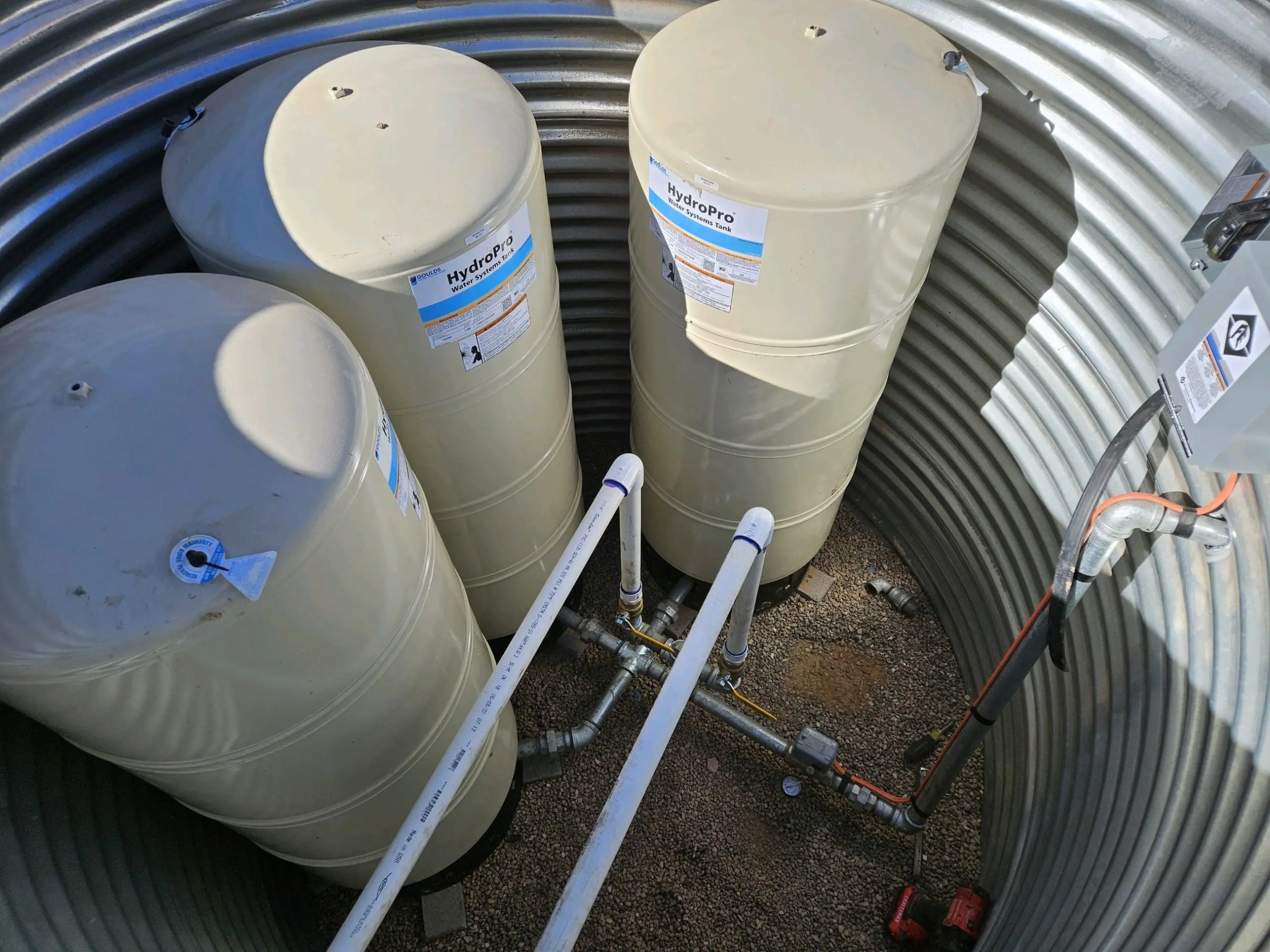 No. Owning the land does not mean you can drill a water well at any point you choose. In New Mexico, a proposed well has to fit the applicable permit and state rules, clear required setbacks from other wells and potential contamination sources, and be physically accessible for drilling and future service. Only after those constraints are screened does it make sense to compare groundwater conditions and the complete water-system layout.
That distinction matters on rural property. An open patch of land may look ideal from the surface and still conflict with a neighboring well, septic disposal field, easement, overhead power line, permit condition or equipment-access problem. A location can also be legally possible but still be a poor drilling target.
For property owners in Santa Fe and Northern New Mexico, the useful question is not simply, “Where do I want the well?” It is, “Is this particular point actually available for a well, and if it is, is it worth evaluating further?”
Why Property Ownership Does Not Make Every Spot Drillable
A private water well is not treated like an unrestricted landscaping improvement. It is a regulated point of diversion from groundwater. New Mexico’s domestic-well rules allow the State Engineer to place conditions on a domestic well permit, and those conditions can affect where the well is drilled, how it is constructed and how the water is used.
This is why “it is my property” is only the starting point. Before a preferred drilling point becomes a real candidate, several separate issues have to line up: authorization for the proposed well and use, required separation from other wells and contamination sources, legal and physical access to the point, and practical groundwater and water-system considerations.
These are not interchangeable. Meeting a setback does not guarantee that a location will produce enough water. Finding promising groundwater information does not override a permit condition. And a location that looks good on a map is not useful if a drilling rig cannot safely reach it.
Does a New Mexico Water Well Need a Permit Before Drilling?
For a new domestic groundwater well in New Mexico, the property owner generally needs authorization from the New Mexico Office of the State Engineer before drilling begins. The exact authorization depends on the proposed use and the property. A household well, replacement well, supplemental well, agricultural project or commercial use should not automatically be treated as the same type of project.
Boylan has a separate guide explaining what permits may be required before drilling a new water well in New Mexico. That permitting step should come before assuming that any marked location on the parcel is approved.
The current Domestic Well Rules also state that the State Engineer may reject an application in certain areas where a court has restricted new wells or where a government entity has established a prohibition on, or recommendation against, new wells because of water-quality concerns. Permit conditions can also be more restrictive when lawful county or municipal requirements apply.
New Mexico also generally requires well construction to be performed by a well driller licensed by the state, subject to limited exceptions in the rule. The issued permit and its conditions should be reviewed before equipment is mobilized.
What Well Setbacks Can Restrict the Drilling Location?
Setbacks are one of the clearest reasons you cannot simply pick any point on the property. They create minimum separation between a proposed well and features that can affect neighboring water sources or groundwater protection.
Existing Wells of Other Ownership
Under the current New Mexico Domestic Well Rules, a new domestic well is generally required to be set back at least 50 feet from an existing well of other ownership. The rule allows the State Engineer to grant a variance from the 50-foot requirement when the applicant has the consent of the owner of the existing well and the State Engineer determines that granting the variance will not impair existing water rights.
The important planning point is simple: a convenient open area can become unavailable once the location of a neighboring well is confirmed. Do not rely on a fence, driveway or rough visual estimate to determine the legal relationship between the two wells.
Septic Systems and Other Contamination Sources
A private well also needs separation from onsite liquid-waste components and other potential contamination sources. New Mexico Environment Department rules currently list a 50-foot minimum between a private drinking-water well and a building sewer or treatment unit such as a septic tank, and a 100-foot minimum between a private drinking-water well and a disposal field or seepage pit.
Those figures come from the current statewide liquid-waste setback table, but they should not be treated as a universal site approval. The rules include additional provisions, exceptions and treatment options, and a particular property may be affected by permit conditions or other requirements. The well and septic layout should be coordinated rather than designed as two unrelated projects.
For more on protecting a private well after installation, see Boylan’s guide to protecting a well from contamination throughout the year.
Can Property Lines, Easements or Other Ownership Affect the Well Location?
Yes, but there is an important distinction: there is not one statewide property-line setback number that should be invented and applied to every well project. Property boundaries still matter because the well must be located on the authorized property or place of use, and easements, recorded restrictions, access rights, utility corridors and local development rules can affect where improvements may be placed.
A fence is not necessarily a surveyed property line. An old road does not necessarily establish a legal access right. A wide open area may be crossed by a utility easement. Before treating a boundary-area location as available, review the deed, survey or plat, recorded easements and any applicable county or municipal requirements.
This is also where a property-specific legal or land-use question may go beyond what a water-well contractor can determine from the physical site alone. The actual records and applicable authority control.
Can You Drill Where the Rig Cannot Easily Reach?
A drilling location also has to work in the physical world. New Mexico Office of the State Engineer consumer guidance tells property owners to consider fences or trees that may need removal, overhead power lines, site leveling and future access to the well when determining a drilling location.
Water-well drilling uses large, heavy equipment. The route to the proposed point can be limited by narrow gates, sharp turns, steep grades, soft ground, trees, fences and overhead utilities. The drilling point also needs enough working room for the equipment being used. Because rig configurations and site conditions vary, it is better to have the drilling contractor evaluate access than to rely on a generic pad-size rule.
Future access matters too. A well may eventually need pump service, inspection, rehabilitation or other work that requires service equipment near the wellhead. A location that is barely accessible during construction can become much harder to service after landscaping, walls, garages or other improvements are added.
Do Utilities, Trees, Slopes and Future Construction Matter?
They can turn a seemingly simple location into a poor choice. Overhead electrical lines can interfere with tall drilling equipment. Buried utilities can affect excavation and trench routes. Trees and fences may restrict equipment movement. Steep or unstable terrain can complicate access and working conditions.
Future plans matter just as much. If you expect to add a garage, barn, guest house, driveway, septic replacement area or other structure, include those plans before finalizing the well location. The goal is not merely to find a spot that works today. It is to avoid creating a permanent conflict with the way the property may be used later.
Can a Legal Well Location Still Be a Poor Place to Drill for Water?
Yes. Legal drillability and groundwater suitability are different questions.
A point can clear the known regulatory and access screens and still have uncertain groundwater conditions. Northern New Mexico geology can change significantly across relatively short distances. Bedrock, fractured rock, volcanic deposits, sand, gravel and other formations influence how groundwater occurs and how a well may perform.
Nearby well records, local geology and groundwater information can help evaluate a drilling target, but they do not guarantee depth, yield or water quality on your parcel. A neighboring productive well is useful evidence, not a promise that your well will behave the same way.
Boylan’s article on dry-hole risk when drilling a Santa Fe water well explains why drilling always includes geological uncertainty.
Once the legally and physically unusable areas have been screened out, groundwater evidence can help compare the remaining candidates. That is a different decision from simply asking whether you are allowed to drill at a particular point.
The Four Permissions Test: Can I Drill Here?
A practical way to screen a proposed location is to ask four separate questions in order.
| Screen | Question | What Can Stop the Location? | What Comes Next? |
| 1. Authorization | Can the proposed well and water use be authorized? | Permit conflict, restricted area, wrong use category or an unresolved permit condition. | Confirm the current OSE authorization and permit conditions. |
| 2. Location constraints | Does the point clear required well and contamination setbacks and property constraints? | Neighboring well, septic or disposal area, easement, ownership or other applicable restriction. | Verify actual locations, records and current requirements. |
| 3. Physical access | Can drilling and future service equipment safely reach and work at the point? | Overhead power, narrow access, slope, trees, fences, unstable ground or insufficient working room. | Have the drilling contractor evaluate the route and work area. |
| 4. Groundwater/system fit | Is the remaining point a reasonable place to investigate for a complete water system? | Weak groundwater evidence, difficult system layout, excessive trenching or conflict with future property plans. | Compare the remaining candidates using groundwater information and complete-system planning. |
A “yes” to one screen does not answer the other three. For example, clearing the septic setback does not mean the permit is correct, the rig can reach the site or the groundwater will be productive.
Hard Stops and Design Trade-Offs Are Not the Same Thing
It helps to separate problems that can stop a proposed location from issues that simply make one usable location less convenient than another.
| Type | Examples | How to Think About It |
| Potential hard stop | Unresolved authorization; required setback conflict; location outside authorized property; unsafe or unworkable equipment access. | Resolve the conflict, determine whether a lawful approval or variance is available, or evaluate another point. |
| Design trade-off | Longer trench; greater distance from the house; less convenient landscaping; different pressure/storage layout. | Compare cost, serviceability and long-term system design among otherwise usable locations. |
| Uncertainty requiring more evidence | Groundwater potential, depth, yield, subsurface geology. | Use available well records, geology and professional evaluation without treating the result as a guarantee. |
A Simple Example: Three Open Areas, Only One Worth Evaluating Further
Imagine a rural property owner identifies three open areas that all look large enough for a drilling rig.
Spot A is close to the planned house, but an existing neighboring well puts the proposed point inside the applicable 50-foot separation. Spot B clears that issue but conflicts with the planned septic disposal field and sits beneath overhead lines that complicate equipment access. Spot C is farther from the house, but it clears the known restriction screens and remains accessible.
That does not mean Spot C is guaranteed to be approved or guaranteed to produce water. It means Spot C is the first candidate worth evaluating further for groundwater potential and complete-system design. This is the key difference between eliminating an unusable point and identifying the best final drilling target.
What Should I Check Before Marking a Well Location?
Before painting an X on the ground or scheduling drilling, gather enough information to screen the proposed point. Start with the issued or proposed well authorization and the intended water use. Then identify existing and neighboring wells, the septic tank and disposal area, property boundaries, recorded easements, buried and overhead utilities, roads and gates, major drainage features, planned structures and a practical equipment route.
After those constraints are understood, evaluate the remaining locations for groundwater and complete-system practicality. Consider how the pump, pressure tank, controls, storage if needed, electrical service and water line will fit together.
If you are still choosing among several usable locations, Boylan’s related article on where a new water well should be located on a New Mexico property addresses the broader site-planning decision. If your question is how to compare groundwater evidence among usable locations, use the companion guide on finding the best place to drill once it is published.
For the construction sequence itself, see The Process of Drilling a Domestic Water Well – A Step-by-Step Guide.
Budget planning also needs to account for more than the borehole. Boylan’s guide to the cost of drilling a new water well in New Mexico discusses depth, geology, pump equipment, trenching and other complete-system factors.
Frequently Asked Questions
Can I drill a well anywhere on land I own?
No. Ownership alone does not make every point available for a well. The proposed location must fit the applicable authorization and permit conditions, required well and contamination setbacks, property constraints, equipment access and other applicable state or local requirements.
Do I need a permit to drill a well in New Mexico?
A new domestic groundwater well generally requires authorization from the New Mexico Office of the State Engineer before drilling. Other types of water use, replacement wells or local development requirements can involve different or additional approvals.
How close can a new well be to another person’s well?
Under the current New Mexico Domestic Well Rules, a new domestic well is generally required to be at least 50 feet from an existing well of other ownership. The State Engineer can grant a variance under specified conditions, including consent from the other well owner and a determination that existing water rights will not be impaired.
Can I drill near my septic system?
Only if the location meets the applicable liquid-waste setback requirements and other site conditions. The current statewide table generally requires 50 feet between a private drinking-water well and a building sewer or treatment unit, and 100 feet from a disposal field or seepage pit. Verify the current rule and the actual septic layout for the property.
Can I drill next to my property line?
Do not assume there is one statewide property-line number for every private well. The answer depends on the authorized location, neighboring wells, easements, property records, local rules and other constraints. Verify the survey or plat and the requirements that apply to the parcel.
What if my preferred spot does not meet a setback?
Do not drill first and try to solve the conflict later. Determine whether the applicable rule allows a variance or other lawful option, and whether the required conditions can actually be met. If not, evaluate another location.
Does a legal location guarantee enough water?
No. A location can satisfy the known regulatory and access requirements and still have uncertain groundwater production. Geology, aquifer conditions, depth and local groundwater variability affect drilling results. No location should be presented as guaranteed water.
Plan a New Water Well with Boylan Water Well Service & Supply
The most useful way to think about a new well location is to screen restrictions before optimizing the site. First establish whether the proposed well and use can be authorized. Then check well spacing, septic and contamination setbacks, property constraints and equipment access. Only after a point survives those screens should groundwater potential and complete-system design determine whether it deserves further consideration.
Boylan Water Well Service & Supply provides residential, commercial, agricultural, livestock, replacement and new-construction water well drilling along with pump systems, well inspections, pressure systems, storage and other complete water-system services throughout Santa Fe and Northern New Mexico.
If you are planning a new well, contact Boylan Water Well Service & Supply at (505) 438-3416 to discuss the property, intended use, access and water-system needs before drilling.
Boylan Water Well Service & Supply
2743 Boylan Circle, Space 11
Santa Fe, New Mexico 87507
(505) 438-3416
Sources and Regulatory References
New Mexico Domestic Well Rules, 19.27.5 NMAC – State rules governing domestic-well permits and permit conditions, including the minimum setback from an existing well of other ownership, variance language and licensed-driller requirements.
New Mexico Liquid Waste Disposal and Treatment Rules, 20.7.3 NMAC – NMED rules containing Table 302.1 setback requirements between private drinking-water wells and onsite liquid-waste components.
New Mexico Office of the State Engineer – Drilling Your Water Well – Consumer guidance addressing permits, licensed well drillers, well setbacks, physical obstacles and future well access.
Boylan Water Well Service & Supply – What Permits Are Required Before Drilling a New Water Well in New Mexico? – Related Boylan planning guide covering state authorization and other approvals that may apply before drilling.
Boylan Water Well Service & Supply – Our Services – Company information on water well drilling and related water-system services.
Boylan Water Well & Supply | Santa Fe & Northern New Mexico | 505-438-3416